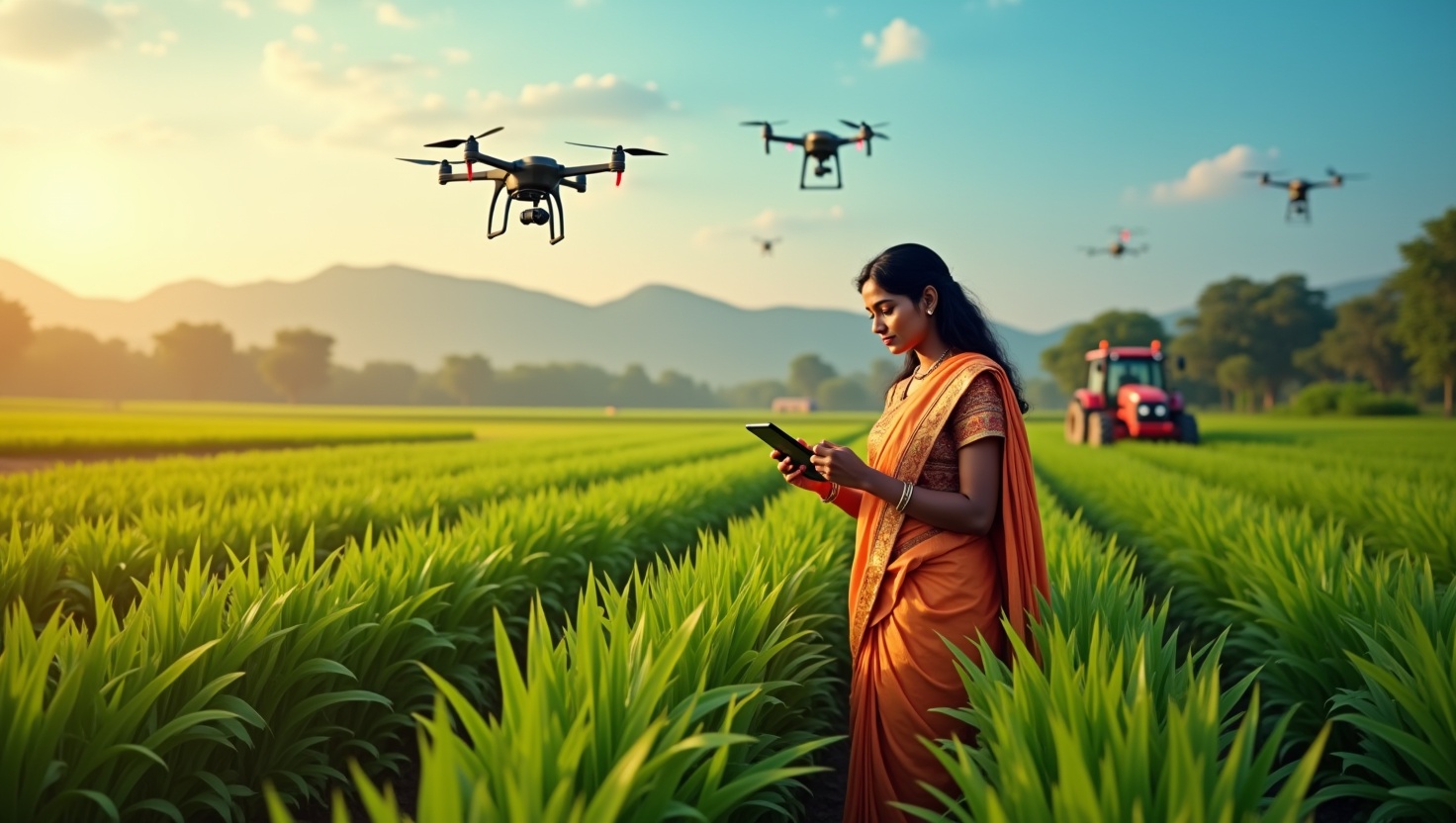
Why You Can’t Afford to Ignore Agritech Innovations in India
If you are steering your agribusiness or shaping policy around Indian agriculture, understanding emerging agriculture technology India is no longer optional—it is imperative. The sweeping adoption of innovative technologies in Indian farming is reshaping the sector’s profitability, sustainability, and global competitiveness. What you decide today about integrating these technologies could define your leadership in an agribusiness landscape that is evolving faster than ever.
Navigating the New Normal: Why This Matters to You
Agriculture in India is at a crossroads where tradition meets tech-driven transformation. For you—whether you are an agribusiness owner, investor, or policymaker—the choices made now will directly impact operational efficiencies, production quality, and the sustainable growth of the rural economy. Technologies that enhance precision, data-driven decisions, and sustainability will be your strongest allies against financial unpredictability and supply chain stresses.
What Is Happening: The Top 3 Disruptive Technologies in Indian Agriculture
1. **IoT-Enabled Precision Farming**
Internet of Things (IoT) devices are revolutionizing monitoring and managing of farms at unprecedented granular levels. Sensors tracking soil health, moisture, nutrient levels, and weather are enabling you to optimize resource use, reduce waste, and boost crop yields.
2. **Artificial Intelligence and Data Analytics**
AI-driven platforms analyze vast data sets—from climate modeling to market trends—empowering you with predictive insights. These platforms allow smart planting schedules, automated pest management, and price forecasting that improve profitability.
3. **Blockchain for Supply Chain Transparency**
Blockchain technology is embedding transparency and traceability into agricultural supply chains. For your business, this means enhanced trust with buyers, streamlined operations, and better access to financing linked to verifiable data.
Business and Policy Implications You Need to Grasp
The integration of these agricultural technologies India-wide opens a landscape rich with investment opportunities and market expansion potential. Policymakers investing in supportive infrastructure and regulatory frameworks will drive adoption rates and scalability. Meanwhile, agribusinesses equipped with technology can enhance farm productivity sustainably, reduce risks related to climate variability, and unlock premium markets demanding traceability.
Deep Strategic Insight: Why Technology Adoption Is a Strategic Imperative
Technology adoption is not merely operational upgrade—it’s a strategic pivot that impacts your entire value chain and competitive positioning. Efficient resource management directly correlates with cost control and profitability in a sector with tight margins. Moreover, digital traceability facilitates compliance and certifications crucial for accessing export markets. You are effectively future-proofing your business by embracing these agritech innovations.
Most importantly, these technologies aggregate data that inform macro-level policy and financial decisions. This confluence positions you to leverage not just productivity gains but also financial products like crop insurance schemes and targeted subsidies better aligned with real-time data.
What You Can Do Right Now: Practical Strategic Takeaways
– **Understand** the potential ROI of IoT and AI tools specific to your crop and region.
– **Monitor** government policy updates targeting agritech infrastructure and subsidies.
– **Invest** selectively in pilot projects before scaling technology across your operations.
– **Leverage** blockchain networks to enhance supply chain transparency for premium buyers.
– **Collaborate** with technology providers and innovators to customize solutions tailored to your needs.
Expert Insight
“”In agriculture, timing is rarely just operational — it is strategic.””
“The real opportunity is not in reacting late, but in understanding where the market is moving next.””
“When policy, technology, and farm economics align, growth becomes more scalable.””
Risks and Challenges You Must Manage
With every innovation come risks. IoT and AI technologies require reliable digital infrastructure, which may be uneven in rural areas. Data security, technology literacy, and initial capital outlays represent significant hurdles. Overreliance on technology without integrating local ecological knowledge can also lead to unintended sustainability risks.
Adoption rates could be slowed if policies do not evolve to support inclusive farmer access or if investment focuses largely on large-scale farms, leaving smallholders behind.
What to Watch Next in India’s Agritech Landscape
Keep an eye on evolving government regulations around data privacy and digital agriculture platforms, increased venture capital inflows into agritech startups, and pilots that link blockchain in export supply chains. The evolution of satellite imagery combined with machine learning for pest and disease prediction is another arena poised for breakthroughs.
Conclusion: Why Agriculture Technology India Is Your Competitive Edge
The rise of cutting-edge agritech innovations in India offers more than just improved farming techniques—it signals a paradigm shift in agricultural business strategies focused on sustainability, operational efficiency, and market competitiveness. You stand at a vantage point where the smart integration of IoT, AI, and blockchain can transform risk into resilience and innovation into profitability. For agribusiness leaders and investors focused on long-term impact, harnessing technology is now integral to staying relevant and profitable in a rapidly transforming agricultural ecosystem.