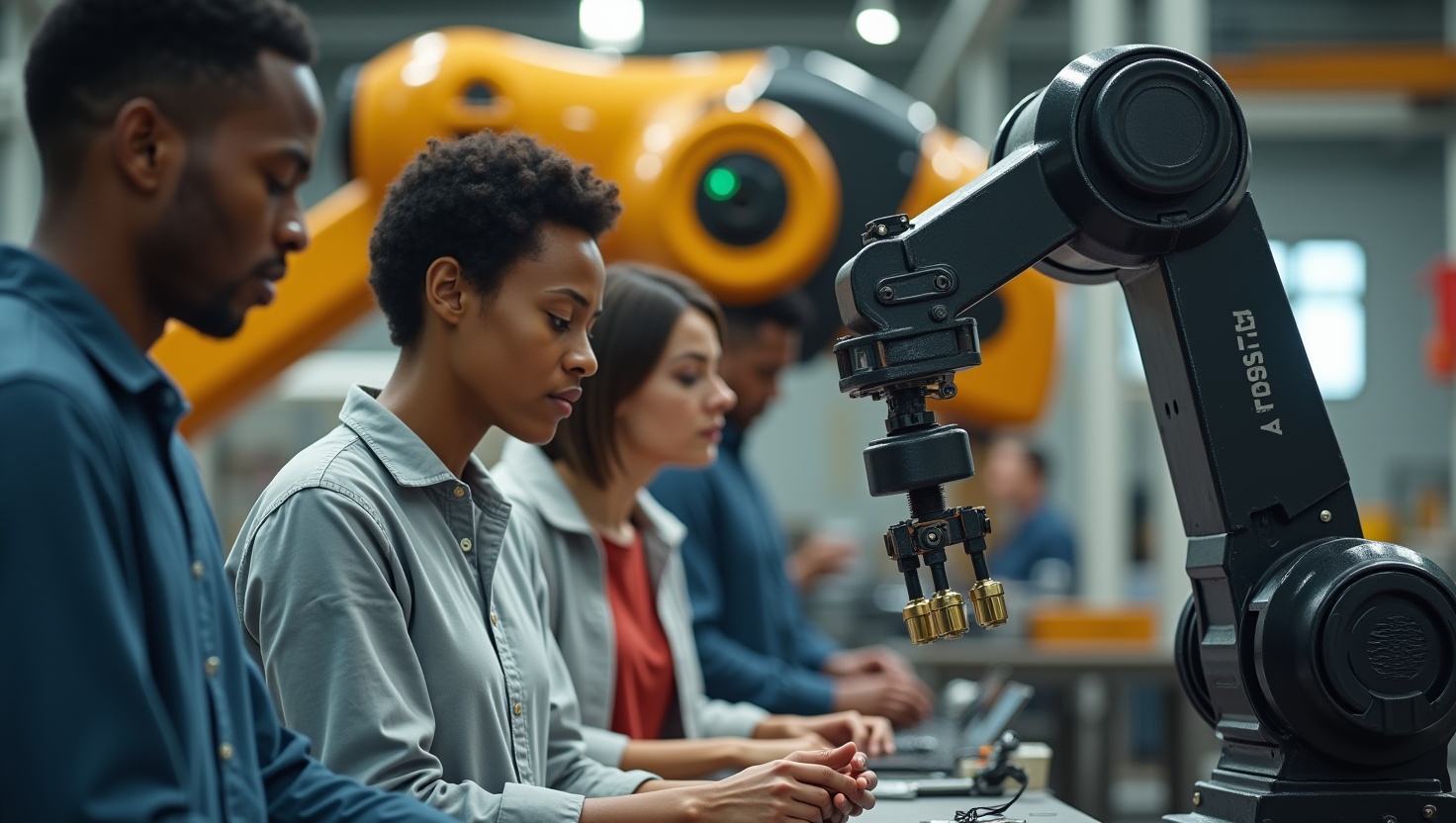
The Rise of Physical AI: Transforming Industries with Robotics and Intelligent Systems
Introduction
In today’s rapidly advancing technological landscape, Physical AI is emerging as a pivotal force, bridging the gap between powerful data processing capabilities and real-world applications. This transformative fusion of robotics and intelligent systems is redefining how industries operate and compete. Not just a buzzword, Physical AI encapsulates the tangible applications of AI, manifesting in devices and machines that can perform tasks autonomously, interact fluidly with their environment, and enhance productivity across various sectors. At this intersection of robotics development and real-world implementations, businesses are witnessing a new wave of innovation akin to a technological renaissance.
Background
Physical AI is essentially the confluence of robotics and autonomous systems—machines designed to perform complex tasks without human intervention. Major players like Nvidia, Siemens, and Google are at the forefront of this frontier, investing heavily in platforms that enable the seamless integration of AI technologies into physical environments. The influence isn’t restricted to the West; Eastern advancements, particularly in China, are equally significant, contributing to a global synergy that is shaping the future of industrial applications.
Nvidia and Google provide examples with their robust infrastructures and AI systems, actively pushing the envelope of what’s possible. Meanwhile, companies like Alibaba are spearheading developments in the East, marking a growing cultural and competitive exchange. From manufacturing robotics to autonomous vehicles, this intercontinental cooperative rivalry is driving extraordinary progress in how AI is physically manifested—something akin to how the invention of the internet spurred a global communication overhaul.
Current Trends in Physical AI Development
The momentum in robotics development is unmistakable, with a noticeable shift towards industrial applications that emphasize efficiency and capability. A noteworthy trend is the adoption of humanoid robots, particularly in China, which accounted for over 80% of global humanoid robot installations by 2025. This shift signifies not only technological advancement but also a change in cultural acceptance and practicality of robotics in everyday operations (Artificial Intelligence News).
Statistics underscore this surge—Jensen Huang termed it the \”ChatGPT moment for robotics\” at CES, underscoring the transformative potential of Physical AI in operating environments. Companies are rapidly integrating these systems, with 58% of global business leaders already utilizing Physical AI, a figure expected to rise to 80% in the next two years. Such robust adoption highlights the critical role of these intelligent systems in stepping up operational capabilities and strategic advancements.
Insight into the Global Competition in Robotics
A burgeoning tech competition is evident in the realm of Physical AI, as Western and Eastern companies vie for technological supremacy. This rivalry not only spurs innovation but also accelerates the development and deployment of these systems globally. As China’s manufacturing capabilities advance rapidly, Western firms focus on creating inclusive platforms to facilitate the broad use of AI and robotics (Artificial Intelligence News).
Expectations for mainstream adoption are high, and the capability to reshape industries like manufacturing is profound. For instance, factories of the future might operate around the clock with minimal human oversight, thanks to fully autonomous systems capable of maintenance and decision-making. This shift could mean less about countries vying for dominance and more about a shared vision of what the future of work looks like.
Future Forecast for Physical AI
Looking forward, Physical AI is set to proliferate across numerous industries, from logistics and healthcare to aerospace and retail. By 2030, the widespread integration of these systems could lead to unprecedented efficiency gains and economic growth. However, this growth comes with challenges—ethical considerations, job displacement concerns, and the need for regulatory frameworks that can accommodate such rapid advancements.
Investments by tech giants will play a crucial role in shaping the landscape, with significant funding directed towards research and development, and the establishment of standards that ensure the safe and equitable deployment of these technologies. Companies that adapt and invest early are likely to reap substantial benefits, setting benchmarks for others to follow.
Call to Action
As Physical AI continues to evolve, staying informed and proactive is crucial for businesses aiming to leverage these technologies for competitive advantage. Subscribe to industry newsletters, follow leading tech blogs, and engage with expert analyses to keep abreast of developments in this exciting space. Harnessing the power of Physical AI today could set the stage for unprecedented growth and efficiency in the years to come.
For more insights, explore our related articles which delve deeper into the implications and opportunities that arise from advancements in Physical AI and Robotics Development: \”The Current Momentum in Physical AI: A Global Perspective\”.