Blog

  • 3 Emerging Technologies Disrupting Indian Agriculture and the Business Opportunities They Create

    3 Emerging Technologies Disrupting Indian Agriculture and the Business Opportunities They Create

    Why You Can’t Afford to Ignore Agritech Innovations in India

    If you are steering your agribusiness or shaping policy around Indian agriculture, understanding emerging agriculture technology India is no longer optional—it is imperative. The sweeping adoption of innovative technologies in Indian farming is reshaping the sector’s profitability, sustainability, and global competitiveness. What you decide today about integrating these technologies could define your leadership in an agribusiness landscape that is evolving faster than ever.

    Navigating the New Normal: Why This Matters to You

    Agriculture in India is at a crossroads where tradition meets tech-driven transformation. For you—whether you are an agribusiness owner, investor, or policymaker—the choices made now will directly impact operational efficiencies, production quality, and the sustainable growth of the rural economy. Technologies that enhance precision, data-driven decisions, and sustainability will be your strongest allies against financial unpredictability and supply chain stresses.

    What Is Happening: The Top 3 Disruptive Technologies in Indian Agriculture

    1. **IoT-Enabled Precision Farming**
    Internet of Things (IoT) devices are revolutionizing monitoring and managing of farms at unprecedented granular levels. Sensors tracking soil health, moisture, nutrient levels, and weather are enabling you to optimize resource use, reduce waste, and boost crop yields.

    2. **Artificial Intelligence and Data Analytics**
    AI-driven platforms analyze vast data sets—from climate modeling to market trends—empowering you with predictive insights. These platforms allow smart planting schedules, automated pest management, and price forecasting that improve profitability.

    3. **Blockchain for Supply Chain Transparency**
    Blockchain technology is embedding transparency and traceability into agricultural supply chains. For your business, this means enhanced trust with buyers, streamlined operations, and better access to financing linked to verifiable data.

    Business and Policy Implications You Need to Grasp

    The integration of these agricultural technologies India-wide opens a landscape rich with investment opportunities and market expansion potential. Policymakers investing in supportive infrastructure and regulatory frameworks will drive adoption rates and scalability. Meanwhile, agribusinesses equipped with technology can enhance farm productivity sustainably, reduce risks related to climate variability, and unlock premium markets demanding traceability.

    Deep Strategic Insight: Why Technology Adoption Is a Strategic Imperative

    Technology adoption is not merely operational upgrade—it’s a strategic pivot that impacts your entire value chain and competitive positioning. Efficient resource management directly correlates with cost control and profitability in a sector with tight margins. Moreover, digital traceability facilitates compliance and certifications crucial for accessing export markets. You are effectively future-proofing your business by embracing these agritech innovations.

    Most importantly, these technologies aggregate data that inform macro-level policy and financial decisions. This confluence positions you to leverage not just productivity gains but also financial products like crop insurance schemes and targeted subsidies better aligned with real-time data.

    What You Can Do Right Now: Practical Strategic Takeaways

    – **Understand** the potential ROI of IoT and AI tools specific to your crop and region.
    – **Monitor** government policy updates targeting agritech infrastructure and subsidies.
    – **Invest** selectively in pilot projects before scaling technology across your operations.
    – **Leverage** blockchain networks to enhance supply chain transparency for premium buyers.
    – **Collaborate** with technology providers and innovators to customize solutions tailored to your needs.

    Expert Insight

    “”In agriculture, timing is rarely just operational — it is strategic.””

    “The real opportunity is not in reacting late, but in understanding where the market is moving next.””

    “When policy, technology, and farm economics align, growth becomes more scalable.””

    Risks and Challenges You Must Manage

    With every innovation come risks. IoT and AI technologies require reliable digital infrastructure, which may be uneven in rural areas. Data security, technology literacy, and initial capital outlays represent significant hurdles. Overreliance on technology without integrating local ecological knowledge can also lead to unintended sustainability risks.

    Adoption rates could be slowed if policies do not evolve to support inclusive farmer access or if investment focuses largely on large-scale farms, leaving smallholders behind.

    What to Watch Next in India’s Agritech Landscape

    Keep an eye on evolving government regulations around data privacy and digital agriculture platforms, increased venture capital inflows into agritech startups, and pilots that link blockchain in export supply chains. The evolution of satellite imagery combined with machine learning for pest and disease prediction is another arena poised for breakthroughs.

    Conclusion: Why Agriculture Technology India Is Your Competitive Edge

    The rise of cutting-edge agritech innovations in India offers more than just improved farming techniques—it signals a paradigm shift in agricultural business strategies focused on sustainability, operational efficiency, and market competitiveness. You stand at a vantage point where the smart integration of IoT, AI, and blockchain can transform risk into resilience and innovation into profitability. For agribusiness leaders and investors focused on long-term impact, harnessing technology is now integral to staying relevant and profitable in a rapidly transforming agricultural ecosystem.

  • India’s Farm Export Growth to $55 Billion by 2025: Strategic Insights for Agribusiness Leaders

    India’s Farm Export Growth to $55 Billion by 2025: Strategic Insights for Agribusiness Leaders

    India’s agriculture export sector is poised for transformative growth, with projections estimating farm exports to surge to $55 billion by 2025. As an agribusiness leader, founder, policymaker, or investor, this milestone represents more than just a headline figure—it signals a critical pivot point for how you position your enterprise or investment within the global agriculture trade landscape.

    ### Why This Matters to You

    This projected growth is not merely a reflection of volume expansion but a testament to evolving market dynamics, policy shifts, and technological advancements. For your agribusiness, the implications are multifaceted: intensified global competition, heightened demand for supply chain efficiency, and increasing emphasis on sustainability and quality standards. Understanding these factors equips you to make strategic decisions that safeguard and enhance your market share in an increasingly interconnected economy.

    ### The Current Landscape: What Is Happening?

    India’s farm exports growth trajectory is driven by a combination of government initiatives, agritech adoption, and rising global demand for diverse agricultural commodities. The trade ministry’s ambition mirrors broader policies aimed at enhancing farm profitability, stabilizing rural economies, and leveraging India’s comparative advantage in crops such as rice, spices, tea, and recently emerging sectors like organic produce and processed foods.

    Simultaneously, recent policy reforms around export incentives and infrastructure investment have begun to streamline the agricultural export ecosystem. These efforts are complemented by agritech innovations that enhance traceability, quality control, and supply chain transparency—critical factors for meeting stringent international standards.

    ### Key Business and Market Impacts

    Navigating this growth phase demands that you assess the intersection of several critical factors impacting your business:

    – **Policy Impact:** Understanding India’s evolving agricultural trade policies will be paramount. Export regulations, tariffs, and trade agreements directly influence your operational costs and market access.

    – **Supply Chain Optimization:** Efficient logistics and cold chain infrastructure are no longer optional but essential to preserving product integrity and meeting delivery commitments.

    – **Sustainability Standards:** Global buyers increasingly favor exporters who demonstrate sustainable farming and ethical sourcing practices.

    – **Market Diversification:** Accessing new markets reduces dependency risk and opens avenues for higher-margin products.

    ### Strategic Analysis: Positioning for Growth

    The export growth forecast invites you to critically evaluate your agribusiness strategy against global benchmarks. Consider these strategic insights:

    – Alignment of your production practices with international quality and sustainability benchmarks enhances competitive advantage.

    – Investing in precision agriculture and supply chain technologies can reduce waste and improve compliance with export requirements.

    – Building strategic partnerships, both domestically and internationally, is indispensable for expanding market reach and sharing risks.

    – Advocating for and engaging with policy dialogues ensures your business interests are represented as trade frameworks evolve.

    “In agriculture, timing is rarely just operational — it is strategic.” This rings especially true as you calibrate your business to capture export growth opportunities.

    ### Practical Takeaways for Agribusiness Leaders

    – **Understand evolving Indian agriculture trade policies deeply and anticipate their impact on your exports.**
    – **Monitor advances in agritech that enhance traceability and compliance—these will be market differentiators.**
    – **Prioritize investments in supply chain infrastructure to ensure product quality and timely deliveries.**
    – **Focus on sustainable farming and transparent sourcing to align with global buyer expectations.**
    – **Explore diversification into niche and high-value product segments to maximize profitability.**

    “The real opportunity is not in reacting late, but in understanding where the market is moving next.” Harness this forward-looking mindset to innovate and lead.

    ### Risks and Cautions

    Rapid export growth is not without challenges. You must navigate volatile global commodity prices, fluctuating currency risks, and potential non-tariff barriers imposed by importing countries. Overreliance on specific markets or commodities can expose your business to geopolitical and trade policy shocks. Furthermore, systemic supply chain bottlenecks may constrain your ability to scale sustainably if not addressed proactively.

    ### What You Should Watch Next

    – Implementation details and updates on India’s agricultural export policies, including export promotion schemes and trade agreements.
    – Technological advancements in agritech supporting export quality and traceability.
    – Emerging markets and consumer trends that could reshape demand patterns.
    – Developments in sustainability regulations globally that impact Indian farm exports.

    ### Conclusion

    India’s ambition to scale farm exports to $55 billion by 2025 is a clarion call for you to sharpen your agribusiness strategy, embrace innovation, and anticipate global market shifts. This growth trajectory reflects a complex interplay of policy, technology, sustainability, and market dynamics. As the Indian agriculture export ecosystem takes center stage, your ability to strategically navigate these facets will define your success in international agriculture trade.

    India farm exports are evolving into a powerhouse of agribusiness opportunity. By aligning your operations with this growth narrative, you ensure your enterprise remains competitive, profitable, and poised for sustainable expansion in the global arena.

  • India’s Farm Export Potential: Unlocking $55 Billion by 2025 with Strategic Trade Policies

    India’s Farm Export Potential: Unlocking $55 Billion by 2025 with Strategic Trade Policies

    Why India’s Farm Export Growth Is Crucial for Your Agribusiness

    India’s agricultural export sector is on the cusp of a landmark transformation, aiming to achieve a staggering $55 billion in farm exports by 2025. As a stakeholder in agribusiness, investment, policy, or supply chain management, this signals more than just a number—it represents a pivotal moment to rethink your strategies in a rapidly evolving global marketplace. The policies, innovations, and infrastructure developments driving this growth hold key insights for how you can capitalize on expanding markets, improve farm profitability, and contribute to a thriving rural economy.

    Why This Matters to You: The Stakes Are High and Opportunities Real

    Your role within this ecosystem—whether as a founder, investor, or policymaker—means that the projected rise in India farm exports directly impacts your decision-making framework. This isn’t an incremental sectoral shift; it’s a directional change that reshapes market opportunities, trade partnerships, and investment flows. Understanding how agri trade policy reforms and sustainable agriculture practices align to boost India’s export competitiveness will help you position your ventures or portfolios for sustainable growth and resilience.

    What Is Happening: Policy, Technology, and Market Dynamics Converge

    India’s ambitious farm export target is underpinned by several critical trends:

    • Enhanced Government Trade Policies: Recent initiatives to simplify export procedures, reduce non-tariff barriers, and enter new free trade agreements are streamlining operations for exporters.
    • Investment in Sustainable Agriculture: Adoption of climate-smart farming techniques and certifications for organic and sustainable produce enhance appeal in discerning global markets.
    • Modernizing Farm Supply Chains: Technologies like blockchain for traceability, refrigerated logistics, and digital marketplaces improve efficiency and product quality.

    These combined factors are not just raising the value of exports but also transforming Indian agriculture from a traditional commodity supplier into a sophisticated global player.

    Key Agribusiness and Market Impacts You Should Consider

    • Expansion of High-Value Crop Exports: Shifts in global demand for spices, fruits, grains, and organic products create profitable niches.
    • Increased Access to Global Markets: With enhanced trade facilitation, exporters can tap into emerging and established markets across Southeast Asia, EU, and Americas.
    • Strengthened Rural Economy: Export growth translates into better incomes for farmers, incentivizing adoption of best practices and technology.

    Strategic Insights: How to Capitalize on India’s Agricultural Export Growth

    To harness this opportunity effectively, think beyond traditional export models. Consider integrating agritech solutions that improve yield, quality, and compliance. Engage closely with evolving agri trade policies to anticipate tariff changes, export incentives, and standards. Furthermore, investing in supply chain transparency and sustainability will not only meet regulatory demands but also differentiate your brand internationally.

    “In agriculture, timing is rarely just operational — it is strategic.”

    Practical Takeaways for Agribusiness Leaders and Investors

    • Monitor Policy Developments: Stay informed about government export incentives and trade agreements impacting your markets.
    • Invest in Sustainable Practices: Align your farm export strategies with global sustainability trends to capture premium demand.
    • Upgrade Supply Chain Infrastructure: Deploy technology-enabled solutions to enhance traceability and reduce wastage.
    • Collaborate Across Value Chains: Build partnerships among farmers, processors, and logistics providers to scale and ensure quality.

    “The real opportunity is not in reacting late, but in understanding where the market is moving next.”

    Risks and Challenges to Navigate

    While the projections are promising, you must consider lingering challenges:

    • Regulatory Uncertainty: Shifting export policies and international trade tensions can affect market access.
    • Resource Constraints: Infrastructure gaps, especially in cold storage and transport, may disrupt supply chains.
    • Climate Risks: Sustainable agriculture demands significant investment to mitigate weather-related risks that threaten crop reliability.

    Proactive risk management and adaptive strategies will be essential to maintain competitiveness.

    What to Watch Next: Indicators and Trends Shaping Your Export Strategy

    • Shifts in Global Demand: Keep an eye on consumer preferences for specific agricultural products and certifications.
    • Policy Announcements: New trade agreements and tariff adjustments often signal market opening or restrictions.
    • Technological Adoption Rates: The pace at which agritech innovations are embraced can accelerate export capacity and quality.

    Conclusion: Positioning Your Agribusiness for the $55 Billion India Farm Exports Horizon

    The projected rise in India farm exports to $55 billion by 2025 is more than a headline; it is a business imperative calling for strategic foresight and agile execution. By aligning your operations with evolving agri trade policy, investing in sustainable practices, and modernizing your supply chain through technology, you position yourself at the forefront of Indian agriculture’s global expansion. Whether you lead a farm enterprise, an agritech startup, or a policy initiative, the opportunities embedded in India’s agricultural export growth are yours to capture.

    “When policy, technology, and farm economics align, growth becomes more scalable.”

    This is your moment to engage deeply with the factors defining India’s agricultural export future and translate them into tangible value for your agribusiness and investment portfolio.

  • India’s Path to $55 Billion in Farm Exports by 2025: Strategic Insights for Agribusiness Leaders

    India’s Path to $55 Billion in Farm Exports by 2025: Strategic Insights for Agribusiness Leaders

    India’s agricultural export sector is on the cusp of a major transformation — projected to reach an impressive $55 billion by 2025. If you are an agribusiness owner, investor, policymaker, or agriculture professional, this forecast is a signal you cannot afford to ignore. The expansion of India’s farm exports is not just a headline; it offers you a strategic doorway to tap into global demand, refine your operations, and elevate the sustainability and profitability of your agricultural enterprise.

    Why India’s $55 Billion Farm Export Target Matters to You

    The magnitude of India’s farm exports scaling up to $55 billion within just a few years reshapes the entire agricultural business ecosystem. This target means intensified market opportunities, evolving trade policies, and a shift towards innovation-led growth. For your business, this translates into actionable levers to scale operations, diversify export portfolios, and leverage emerging agritech solutions. You must align your strategic decisions with these macro trends if you want to remain competitive and expand your global footprint.

    What is Driving This Surge in India Farm Exports by 2025?

    Several interconnected factors are powering this ambitious export growth:

    • Strategic Agricultural Trade Policies: The Indian government is pushing robust export incentives, streamlining customs procedures, and upgrading bilateral trade agreements to ease market access and reduce friction.
    • Agritech Innovation: From precision farming to digital marketplaces, technology is revolutionizing crop quality, traceability, and supply chain transparency.
    • Supply Chain Modernization: Enhanced cold storage, logistics networks, and real-time data integration are minimizing post-harvest losses and improving delivery efficiency.
    • Global Demand Dynamics: Rising global demand for organic, specialty, and diverse food products positions India as a reliable supplier with a wide portfolio of crops and commodities.

    Key Business and Market Impacts

    This growth trajectory will deeply influence your agribusiness in several ways:

    • Market Diversification: Expanding into new international markets reduces dependence on traditional buyers and opens higher-margin channels.
    • Capital Allocation: Investors will increasingly focus on scalable, tech-enabled enterprises, signaling a premium on innovation-driven models.
    • Sustainability Compliance: Export markets are demanding stringent sustainability and quality certifications, making environmental stewardship and quality control non-negotiable for you.

    Strategic Insight: Positioning Your Agribusiness for Export Growth

    To capture this expanding export market, it is critical you embed a multi-pronged approach that covers policy alignment, supply chain agility, and technology adoption. Consider these strategic imperatives:

    • Align closely with evolving agricultural trade policies to leverage subsidies, incentives, and tariff benefits.
    • Invest in data-driven agritech for enhanced productivity and quality assurance, which will meet stringent global standards.
    • Build partnerships across the supply chain to ensure efficient and transparent logistics and distribution.
    • Focus on sustainability credentials — increasingly a decisive factor in export contracts.

    “In agriculture, timing is rarely just operational — it is strategic.” This underscores that early movers who integrate innovation and policy understanding will set the pace in the expanding export market.

    Practical Takeaways for Agribusiness Leaders

    • Understand Market Trends: Monitor shifts in global demand and policy changes regularly.
    • Invest in Innovation: Prioritize agritech tools that improve crop yield and traceability.
    • Engage with Policy Makers: Play an active role in shaping and responding to trade policy.
    • Diversify Export Portfolios: Explore niche and emerging markets alongside traditional ones.
    • Sustainability as Strategy: Embed ESG (Environmental, Social, and Governance) metrics into your export business model.

    Expert Perspective

    “The real opportunity is not in reacting late, but in understanding where the market is moving next.”

    “When policy, technology, and farm economics align, growth becomes more scalable.”

    These insights emphasize that your strategic foresight and agility will determine how successfully you capitalize on the anticipated farm export boom.

    Challenges and Risks to Navigate

    While the outlook is promising, you should also be cautious of potential headwinds:

    • Regulatory Changes: Sudden shifts in trade regulations or international tariffs could affect market access.
    • Climate Vulnerabilities: Climate change impacts on crop yields add complexity to meeting export commitments.
    • Infrastructure Gaps: Despite improvements, supply chain bottlenecks and cold storage deficits remain concerns.
    • Global Competition: Rising competition from other agricultural exporters means you must continuously innovate and differentiate.

    What to Watch Next

    Keep an eye on key developments to stay ahead:

    • New bilateral and multilateral trade agreements impacting agricultural exports.
    • Advances in agritech solutions tailored for export market requirements.
    • Government initiatives targeting export infrastructure and sustainability certifications.
    • Shifts in consumer preferences globally, particularly for organic and specialty food products.

    In Conclusion: Your Strategic Edge in India’s Growing Farm Export Market

    The projected rise of India farm exports to $55 billion by 2025 is more than an economic statistic — it is a call to action. For your business, it means embracing innovation, engaging deeply with policy frameworks, and optimizing supply chains while championing sustainable practices. This is a moment to be proactive, to think beyond traditional paradigms, and to position your agribusiness at the forefront of global trade.

    By focusing on these strategic imperatives, you can unlock new growth avenues, attract serious investment, and build a resilient, profitable agriculture export enterprise in the dynamic landscape ahead.

  • India’s Path to $55 Billion in Farm Exports by 2025: Strategic Insights for Agribusiness Leaders

    India’s Path to $55 Billion in Farm Exports by 2025: Strategic Insights for Agribusiness Leaders

    India’s agricultural export sector is on the cusp of a major transformation — projected to reach an impressive $55 billion by 2025. If you are an agribusiness owner, investor, policymaker, or agriculture professional, this forecast is a signal you cannot afford to ignore. The expansion of India’s farm exports is not just a headline; it offers you a strategic doorway to tap into global demand, refine your operations, and elevate the sustainability and profitability of your agricultural enterprise.

    ### Why India’s $55 Billion Farm Export Target Matters to You
    The magnitude of India’s farm exports scaling up to $55 billion within just a few years reshapes the entire agricultural business ecosystem. This target means intensified market opportunities, evolving trade policies, and a shift towards innovation-led growth. For your business, this translates into actionable levers to scale operations, diversify export portfolios, and leverage emerging agritech solutions. You must align your strategic decisions with these macro trends if you want to remain competitive and expand your global footprint.

    ### What is Driving This Surge in India Farm Exports by 2025?
    Several interconnected factors are powering this ambitious export growth:

    – **Strategic Agricultural Trade Policies:** The Indian government is pushing robust export incentives, streamlining customs procedures, and upgrading bilateral trade agreements to ease market access and reduce friction.
    – **Agritech Innovation:** From precision farming to digital marketplaces, technology is revolutionizing crop quality, traceability, and supply chain transparency.
    – **Supply Chain Modernization:** Enhanced cold storage, logistics networks, and real-time data integration are minimizing post-harvest losses and improving delivery efficiency.
    – **Global Demand Dynamics:** Rising global demand for organic, specialty, and diverse food products positions India as a reliable supplier with a wide portfolio of crops and commodities.

    ### Key Business and Market Impacts
    This growth trajectory will deeply influence your agribusiness in several ways:

    – **Market Diversification:** Expanding into new international markets reduces dependence on traditional buyers and opens higher-margin channels.
    – **Capital Allocation:** Investors will increasingly focus on scalable, tech-enabled enterprises, signaling a premium on innovation-driven models.
    – **Sustainability Compliance:** Export markets are demanding stringent sustainability and quality certifications, making environmental stewardship and quality control non-negotiable for you.

    ### Strategic Insight: Positioning Your Agribusiness for Export Growth
    To capture this expanding export market, it is critical you embed a multi-pronged approach that covers policy alignment, supply chain agility, and technology adoption. Consider these strategic imperatives:

    – Align closely with evolving agricultural trade policies to leverage subsidies, incentives, and tariff benefits.
    – Invest in data-driven agritech for enhanced productivity and quality assurance, which will meet stringent global standards.
    – Build partnerships across the supply chain to ensure efficient and transparent logistics and distribution.
    – Focus on sustainability credentials — increasingly a decisive factor in export contracts.

    “In agriculture, timing is rarely just operational — it is strategic.” This underscores that early movers who integrate innovation and policy understanding will set the pace in the expanding export market.

    ### Practical Takeaways for Agribusiness Leaders
    – **Understand Market Trends:** Monitor shifts in global demand and policy changes regularly.
    – **Invest in Innovation:** Prioritize agritech tools that improve crop yield and traceability.
    – **Engage with Policy Makers:** Play an active role in shaping and responding to trade policy.
    – **Diversify Export Portfolios:** Explore niche and emerging markets alongside traditional ones.
    – **Sustainability as Strategy:** Embed ESG (Environmental, Social, and Governance) metrics into your export business model.

    ### Expert Perspective
    “The real opportunity is not in reacting late, but in understanding where the market is moving next.”

    “When policy, technology, and farm economics align, growth becomes more scalable.”

    These insights emphasize that your strategic foresight and agility will determine how successfully you capitalize on the anticipated farm export boom.

    ### Challenges and Risks to Navigate
    While the outlook is promising, you should also be cautious of potential headwinds:

    – **Regulatory Changes:** Sudden shifts in trade regulations or international tariffs could affect market access.
    – **Climate Vulnerabilities:** Climate change impacts on crop yields add complexity to meeting export commitments.
    – **Infrastructure Gaps:** Despite improvements, supply chain bottlenecks and cold storage deficits remain concerns.
    – **Global Competition:** Rising competition from other agricultural exporters means you must continuously innovate and differentiate.

    ### What to Watch Next
    Keep an eye on key developments to stay ahead:

    – New bilateral and multilateral trade agreements impacting agricultural exports.
    – Advances in agritech solutions tailored for export market requirements.
    – Government initiatives targeting export infrastructure and sustainability certifications.
    – Shifts in consumer preferences globally, particularly for organic and specialty food products.

    ### In Conclusion: Your Strategic Edge in India’s Growing Farm Export Market
    The projected rise of India farm exports to $55 billion by 2025 is more than an economic statistic — it is a call to action. For your business, it means embracing innovation, engaging deeply with policy frameworks, and optimizing supply chains while championing sustainable practices. This is a moment to be proactive, to think beyond traditional paradigms, and to position your agribusiness at the forefront of global trade.

    By focusing on these strategic imperatives, you can unlock new growth avenues, attract serious investment, and build a resilient, profitable agriculture export enterprise in the dynamic landscape ahead.

  • How Geopolitical Conflict Is Reshaping Indian Poultry Export Strategies to West Asia

    How Geopolitical Conflict Is Reshaping Indian Poultry Export Strategies to West Asia

    As a leader in agribusiness or an investor deeply vested in the poultry segment, the unfolding geopolitical tensions affecting Indian poultry exports to West Asia are a critical development you cannot afford to overlook. This disruption is not just a fleeting trade hiccup; it signals a transformational shift in how you must approach your export strategies, supply chain resilience, and market diversification. Your ability to navigate these challenges decisively will determine your competitive stance and growth trajectory in one of the world’s most dynamic agri-export corridors.

    ### Why This Matters to You

    Your enterprise’s profitability and growth in poultry exports hinge on stability and predictability in trade flows. The ongoing war in West Asia means significant interruptions in supply routes, regulatory hurdles, and heightened risk perception among buyers, directly impacting your export revenues and operational efficiency. Understanding these dynamics empowers you to recalibrate your strategies, safeguard your supply chain, and capture emerging opportunities beyond traditional markets.

    ### What Is Happening: The Geopolitical Shock to Indian Poultry Exports

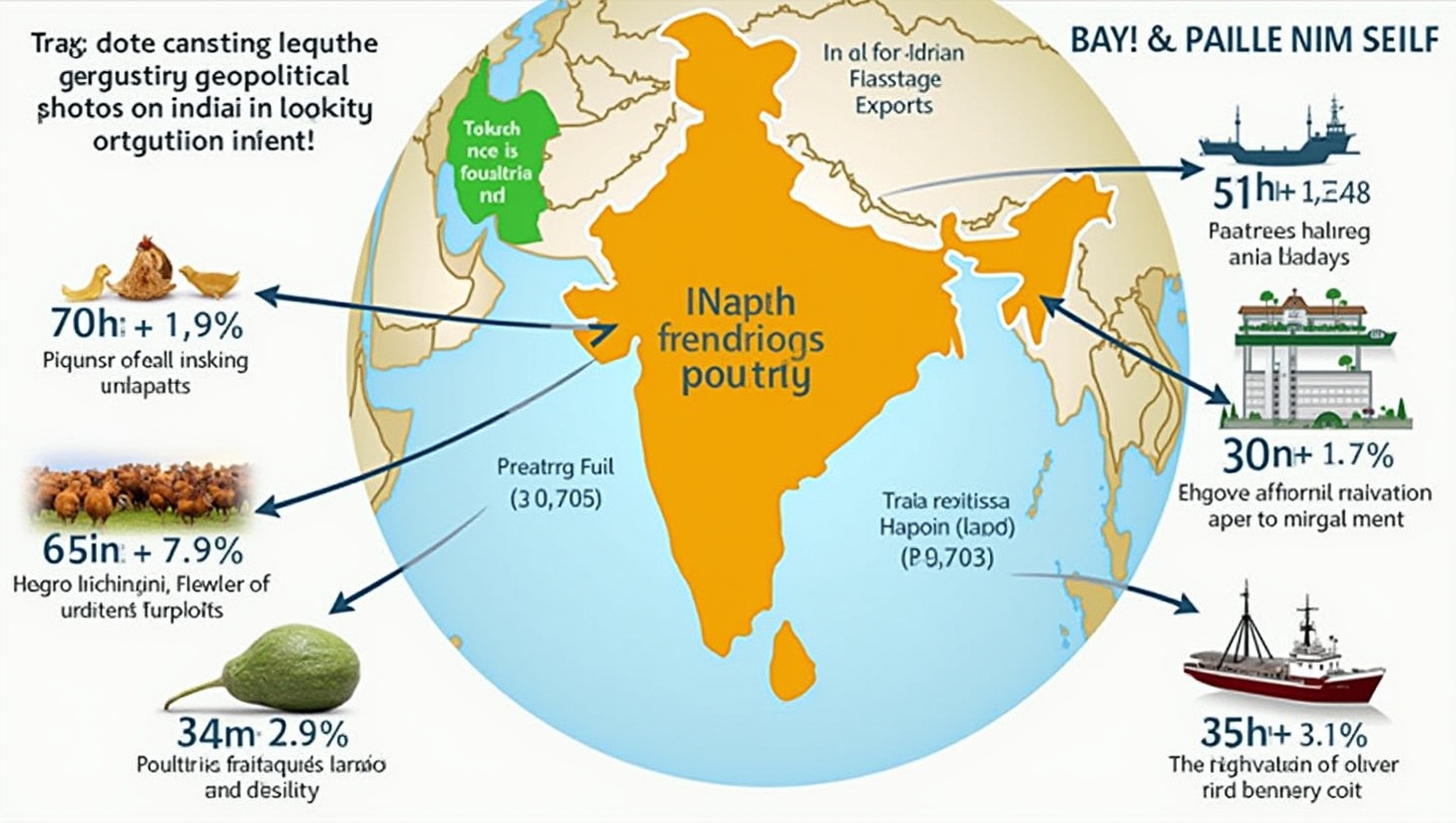
    Indian poultry exporters have long depended on West Asia as a primary destination, attracted by robust demand for affordable, high-quality poultry products. However, the conflict has exposed vulnerabilities in this dependency:

    – Shipping delays and port closures have disrupted logistics.
    – Heightened insurance and freight costs are squeezing margins.
    – Trade restrictions and fluctuating import regulations are leading to uncertain market access.

    This scenario underscores a critical lesson for you—overreliance on a single geopolitical zone renders your export portfolio fragile and susceptible to external shocks.

    ### Key Business and Market Impacts

    The immediate economic impact manifests as reduced export volumes and strained cash flows for exporters operating in this corridor. On a broader scale, the war-induced turbulence is likely to influence Indian poultry’s competitive position globally:

    – Price competitiveness may erode due to increased supply chain costs.
    – Demand from West Asia could contract or shift to alternative suppliers.
    – Domestic poultry producers might face pressure from varying price and demand dynamics.

    Policy responses from Indian authorities in trade support and risk mitigation will be pivotal in shaping how long-term these impacts are.

    ### Strategic Analysis: Rethinking Your Agri-Export Strategy

    To sustain and grow your poultry export business amid geopolitical risk, consider this strategic pivot:

    – **Diversify your export markets:** Explore emerging markets in Southeast Asia, Africa, and Latin America that offer growing demand for poultry with less geopolitical risk.
    – **Strengthen supply chain resilience:** Invest in alternative logistics routes and flexible supply chain frameworks to reduce dependence on any one corridor.
    – **Enhance value-added product offerings:** Adapt product portfolios to suit new market preferences and command better margins.
    – **Leverage technology for real-time risk assessment:** Implement tools that provide actionable insights on geopolitical developments and supply chain bottlenecks.

    “Understanding your risk landscape is not just about damage control; it’s about discovering new avenues for growth,” represents the mindset you must adopt.

    ### Practical Takeaways for Agribusiness Leaders and Investors

    – Monitor geopolitical developments continuously with a dedicated risk assessment team.
    – Build strategic partnerships and collaborations in diversified markets to create local market footholds.
    – Advocate for policy interventions that support export competitiveness, such as subsidies for alternate logistics and export finance.
    – Prioritize sustainability and supply chain transparency to meet increasing regulatory and consumer scrutiny globally.

    ### Expert Insight

    “In agriculture, timing is rarely just operational — it is strategic.”

    “The real opportunity is not in reacting late, but in understanding where the market is moving next.”

    “When policy, technology, and farm economics align, growth becomes more scalable.”

    ### Risks and Challenges Ahead

    While diversification is essential, venturing into new markets involves its own set of risks — cultural barriers, regulatory compliance, and competition intensity. Additionally, the war’s duration and geographic escalation remain uncertain, potentially worsening trade disruptions before improvements surface. You must weigh these risks carefully in your strategic planning to avoid overextension.

    ### What You Should Watch Next

    Keep an eye on:

    – Diplomatic developments and peace initiatives in West Asia that could restore trade stability.
    – Shifts in Indian government policies aimed at export facilitation and supply chain support.
    – Emerging market trends that could present new demand hubs for Indian poultry.
    – Advances in agritech innovations that optimize supply chain and risk management.

    ### Conclusion

    The current geopolitical conflict reshaping Indian poultry exports to West Asia is a clarion call for strategic agility and foresight in your export operations. By appreciating the geopolitical risk, diversifying your export markets, and reinforcing your supply chain resilience, you position your poultry business not just to survive this disruption but to thrive in the evolving global agri-export landscape. Indian poultry exports will continue to be a key driver in agricultural export growth — how you navigate these turbulent waters will define your leadership and profitability in the years to come.

  • How Geopolitical Conflicts are Disrupting Indian Poultry Export Strategies to West Asia

    How Geopolitical Conflicts are Disrupting Indian Poultry Export Strategies to West Asia

    ### Why This Matters to You
    As an agribusiness leader, investor, or policymaker, you understand that market stability is paramount to sustaining growth and profitability. The Indian poultry export market, crucially tied to West Asia, is now being disrupted by ongoing geopolitical conflicts. This disturbance threatens your existing supply chain reliability, challenges your market strategies, and forces you to confront risks that could erode profitability and reduce your competitive edge. Understanding these shifts is essential for recalibrating your approach, safeguarding your assets, and exploring resilient alternatives in export destinations and logistics frameworks.

    ### What Is Happening
    The ongoing war in West Asia has significantly affected Indian poultry exports, a sector that has been expanding steadily due to strong demand in Gulf Cooperation Council (GCC) countries and surrounding markets. The conflict has introduced unpredictability in trade routes, increased logistical costs, and led to delays and restrictions in shipment. These disruptions have not only interrupted supply but also sparked concerns over sustainability and consistency in fulfilling contractual obligations.

    ### Market and Agricultural Impacts
    – **Supply Chain Disruption:** The primary impact is a fractured supply chain causing delays and increased costs. Freight challenges and port congestions are creating bottlenecks.
    – **Demand Volatility:** Geopolitical tensions have dampened purchasing confidence in West Asia, resulting in fluctuating demand patterns which complicate sales forecasting.
    – **Export Revenue Risks:** Indian poultry exporters face revenue volatility as market access narrows, affecting cash flow and investment confidence.
    – **Policy and Regulatory Hurdles:** Trade policies by affected countries may tighten or impose embargoes, limiting export volumes and requiring rapid compliance adjustments.

    ### Strategic Analysis: Navigating Uncertainty in Poultry Export
    You must see beyond immediate disruption towards strategic agility. The Indian poultry export case highlights a broader agricultural export vulnerability to geopolitical risks. Your response should include diversification—both in terms of export markets and supply chain routes. Investing in advanced agritech solutions for real-time logistics monitoring, demand forecasting, and risk analytics will empower you to build a proactive rather than reactive business model.

    “In agriculture, timing is rarely just operational — it is strategic.”

    Focusing solely on West Asia has increased exposure to regional instability. Expanding your markets within Africa, Southeast Asia, and even closer to home in South Asia might dilute risk and stabilize revenue streams. Moreover, sustainability in supply chains, with contingency planning for alternate hubs and transport modes, becomes a non-negotiable.

    ### Practical Takeaways for Agribusiness Leaders
    – **Understand Your Exposure:** Map your poultry export dependencies on West Asia and evaluate associated geopolitical risks.
    – **Monitor Geopolitical Developments:** Stay ahead by integrating geopolitical risk assessment into your business intelligence.
    – **Diversify Export Destinations:** Explore emerging markets with stable political environments and growing poultry demand.
    – **Invest in Supply Chain Resilience:** Leverage agritech for end-to-end visibility, predictive analytics, and flexible logistics planning.
    – **Strengthen Policy Advocacy:** Engage with policymakers to expedite supportive trade frameworks and diplomatic dialogue that safeguard agricultural exports.

    “The real opportunity is not in reacting late, but in understanding where the market is moving next.”

    ### Risks and Challenges Ahead
    Geopolitical conflicts are inherently unpredictable, and their consequences can cascade through your entire agribusiness ecosystem. You face risks of:
    – Sustained market contraction if conflict prolongs
    – Increased operational costs that squeeze margins
    – Stranded inventory or contractual penalties from shipment delays
    – Regulatory flux requiring costly adaptations
    – Potential shifts in consumer preferences in importing countries due to economic uncertainty

    ### What You Should Watch Next
    Keep vigilant on:
    – Shifts in diplomatic relations between India and West Asian nations
    – Emerging trade agreements or sanctions that could reshape export pathways
    – Technological innovations in cold chain and logistics that may reduce transit risks
    – The evolving regulatory landscape in key export markets
    – Competitive moves by other poultry-exporting nations capitalizing on these disruptions

    ### Conclusion
    The geopolitical impact on Indian poultry exports to West Asia underscores a critical lesson for agribusiness professionals: strategic foresight and adaptability are your most valuable assets. You must transition from reliance on singular markets to a diversified portfolio approach backed by resilient supply chains and advanced agritech capabilities. By doing so, you will not only mitigate current risks but position your business to seize opportunities in an increasingly volatile global agricultural landscape.

    Maintaining your market leadership requires integrating geopolitical risk management into your strategic planning. The disruption is a clarion call — your ability to anticipate, diversify, and adapt will define your poultry export business’s future resilience and profitability.

    “When policy, technology, and farm economics align, growth becomes more scalable.”

  • How Geopolitical Conflicts are Disrupting Indian Poultry Export Strategies to West Asia

    How Geopolitical Conflicts are Disrupting Indian Poultry Export Strategies to West Asia

    The ongoing war has significantly impacted Indian poultry exports to West Asia, challenging agribusiness exporters to rethink supply chain logistics and market strategies. This disruption highlights the vulnerability of agricultural export markets to geopolitical risks and underscores the urgent need for diversified export destinations and resilient supply chains. For agribusiness leaders and investors, understanding these shifts is critical to navigating market uncertainties and ensuring sustainable growth in poultry export business.

  • US Iran War News LIVE: Bahrain’s BAPCO Refinery Hit by Alleged Iranian Strike, Regional Tensions Soar

    US Iran War News LIVE: Bahrain’s BAPCO Refinery Hit by Alleged Iranian Strike, Regional Tensions Soar

    The Middle East finds itself on a knife-edge following reports of an alleged Iranian strike on Bahrain’s largest oil refinery, BAPCO. Live updates from sources like the Hindustan Times confirm thick smoke billowing around the facility, signaling significant damage. The Times of India further reported that BAPCO has declared force majeure, a legal status indicating unforeseen circumstances preventing it from fulfilling contractual obligations, underscoring the severity of the incident on oil supplies.

    Adding to the regional turmoil, The Hindu and WSJ highlighted that the Iranian drone attack also impacted a critical desalination plant in Bahrain. This development not only threatens global energy markets but also brings vital water supplies directly into the escalating conflict with Iran, as noted by the Wall Street Journal. Videos circulated by the Hindustan Times show plumes of smoke over Bahrain’s top oil field, corroborating the extent of the damage. These coordinated attacks underscore a dangerous escalation in hostilities, potentially destabilizing an already volatile region and raising concerns over the broader implications for international security and commodity prices.

  • 5 Predictions About the Future of AI in Content Creation That’ll Shock You

    5 Predictions About the Future of AI in Content Creation That’ll Shock You

    The Future of AI Content Creation: Navigating Ethics, Authenticity, and Innovation

    Introduction

    In an era where digital footprints determine the visibility and success of businesses, AI Content Creation emerges as a revolutionary force shaping industries far and wide. The convenience and efficiency of AI in generating content cannot be overemphasized, providing solutions that are both timely and scalable. However, this revolution brings with it the monumental task of navigating Ethics in AI, ensuring that while we create content, we do not lose sight of Authenticity. As companies increasingly turn to AI-driven methods, understanding the ethical ramifications becomes paramount in setting the course for future advancements while maintaining the integrity of content creation.

    Background

    What is AI content creation? Essentially, it’s a technological evolution from traditional content generation methods, harnessing algorithms and machine learning to produce text, images, and videos. Consider it an assistant that never tires, learning and adapting over time to produce material that resonates with target audiences. In recent years, the rise of AI has permeated all sectors, from technology to entertainment, with AI adoption swelling. Yet, as Tosin Ayodele aptly observed, \”_AI adoption is already happening inside your organization, leadership just hasn’t noticed yet_\” (Source). This underscores a critical gap in awareness among leaders who must guide these changes strategically.

    Current Trends in AI Content Creation

    Rapid developments shape the AI content creation arena, with notable trends setting the course for future practices. Authenticity in content is paramount; in a world awash with information, consumers crave real, relatable interactions. AI technologies like natural language processing and deep learning are pushing boundaries, creating content nearly indistinguishable from that crafted by humans. For example, tools like GPT-3 or Jasper AI are revolutionizing how marketers engage with audiences through personalized and timely interactions. However, as content generation evolves, ethical considerations remain firmly in the spotlight.

    Insights on Ethics in AI

    As we delve into AI content creation, ethical considerations unravel a complex web of challenges and demands. It’s crucial to maintain Authenticity while ensuring biases are minimized within AI algorithms. An analogy to consider: AI in content creation should function like a trusted editorial assistant — precise, impartial, and ethical. Businesses have a responsibility to align their strategies with ethical AI practices to maintain consumer trust. Ethical content generation not only fosters brand loyalty but also cements a company’s reputation as a responsible steward of digital transformation.

    Future Forecast

    What lies ahead in the realm of AI content creation? Over the next 5 to 10 years, expect exponential growth in AI capabilities. Advancements in generative AI and the integration of nuanced emotional intelligence will redefine how we perceive automated content. For content marketers, this signifies an urgent need to prioritize leadership engagement in AI strategies to harness its potential fully. Leaders must recognize AI as an essential component of their toolkit to boost creativity and innovation (Source).

    Conclusion and Call to Action (CTA)

    As AI content creation propels us into uncharted territories, the challenge lies not just in embracing the innovations but in doing so ethically and authentically. Businesses are encouraged to explore these tools and strategies within their organizations to remain at the forefront of digital marketing. In a rapidly evolving landscape, staying informed is crucial; subscribe for more insights on AI trends and ethical considerations in digital marketing to stay ahead.

    Interested in further reading? Dive deeper into AI’s transformative role in businesses and the pivotal role of leadership in driving strategic AI implementation. Discover more insights from Tosin Ayodele’s perspective on AI adoption here.