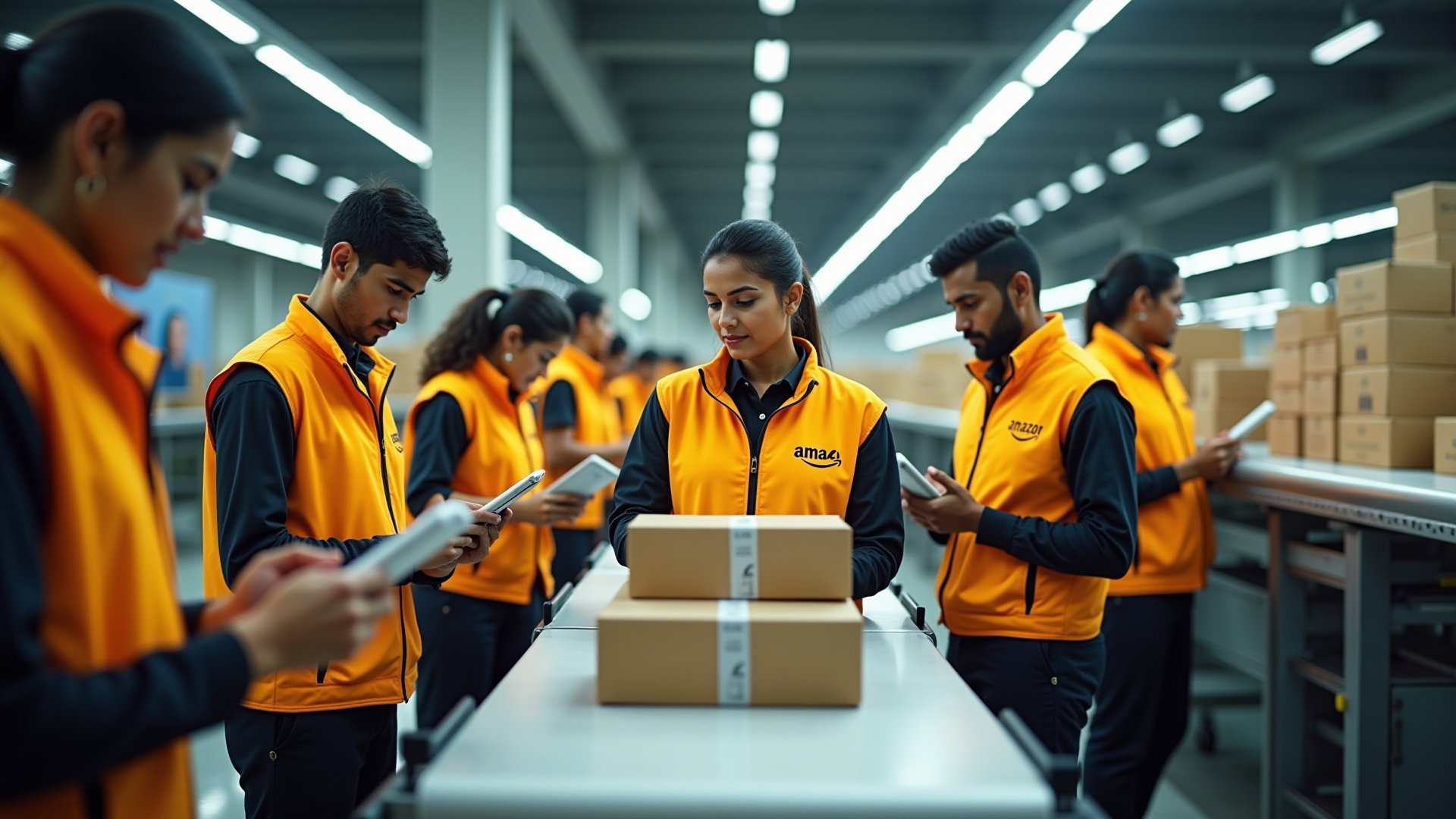
When you’re steering an e-commerce enterprise or leading a D2C brand, logistics is no longer just a backend function—it’s a strategic lever shaping your growth and customer loyalty. Amazon India’s recent Odisha expansion, adding 52 new logistics stations and promising delivery speeds up to five times faster, signals a profound shift in regional e-commerce capabilities. This isn’t just about reaching a new market; it’s about reconsidering how speed, infrastructure, and last-mile execution can transform your competitive positioning and unit economics.
Why This Matters to You
For your business, whether it’s a marketplace operator or a quick-commerce startup, faster delivery networks in emerging regions like Odisha mean redefining customer expectations and operational benchmarks. You must understand that penetration in tier-2 and tier-3 cities isn’t about volume alone anymore—it’s increasingly about the quality of the delivery experience.
Customers across India’s hinterlands are rapidly becoming sophisticated digital consumers. When platforms like Amazon invest heavily in regional logistics hubs, you should read that as a direct challenge and an opportunity: to innovate your supply chain strategies, tighten your last-mile performance, and build loyalty where it counts.
What Is Happening: Amazon’s Odisha Logistics Expansion
Amazon India has strategically launched 52 new logistics stations across Odisha, a move designed to cut delivery times drastically—up to five times faster than before. This deployment addresses a long-standing hurdle in Indian e-commerce: reliability and speed in non-metro areas. The creation of these distribution and fulfillment nodes localizes inventory, reduces transit distances, and accelerates order fulfillment.
This expansion exemplifies a broader industry trend: the shift from metro-centric logistics to a distributed, regionalized infrastructure critical to capturing the growing demand in less-penetrated urban and semi-urban markets.
Key Business and Market Implications
The direct outcomes of Amazon’s Odisha expansion have deep implications beyond just faster delivery:
- Enhanced Unit Economics: Reduced transit times mean lower inventory-holding costs and minimized delivery failures, directly improving profit margins.
- Customer Acquisition and Retention: Speed becomes a decisive factor in winning new customers and securing repeat purchases, since a seamless delivery experience solidifies trust.
- Competitive Fulfillment Advantage: By optimizing last-mile logistics, Amazon sets a high bar that pressures competitors to innovate or partner to remain relevant.
- Regional Market Growth: The expansion signals a rise in purchasing power and digital adoption in tier-2 and tier-3 cities, prompting brands to rethink geographic priorities.
Strategic Insight: What This Means for Your Growth and Operations
Amazon’s move forces you to reconsider how regional logistics infrastructure can be a cornerstone of competitive advantage. If you’re leading a D2C brand or quick commerce initiative focused on emerging markets, there’s no longer room to rely on legacy fulfillment models centralized in metro hubs.
Investing in or partnering for localized fulfillment is imperative. Faster delivery not only satiates increasing consumer expectations but also directly impacts conversion rates and overall customer lifetime value. Consider how such speed enhances your brand perception and customer loyalty in regions primed for digital commerce growth.
“In e-commerce, growth matters — but retention is what turns traffic into a business.”
Practical Takeaways for E-Commerce Leaders
- Evaluate your logistics footprint and identify underserved regional markets where faster delivery can be a differentiator.
- Explore partnerships with platforms or third-party logistics providers that have established regional hubs to optimize fulfillment costs and speed.
- Innovate in last-mile delivery solutions tailoring to tier-2 and tier-3 city challenges—think micro-warehousing, localized inventory, and tech-enabled route optimization.
- Monitor policy developments surrounding ONDC and open commerce initiatives that could incentivize or disrupt current fulfillment models.
- Align your digital payment and checkout processes with improved delivery infrastructure to capitalize on enhanced conversion potential.
Expert Perspective
Amazon’s Odisha expansion exemplifies how logistics investments shape the competitive landscape: “The real edge is not only in selling faster, but in building a brand, a system, and a customer relationship that lasts.”
Additionally, faster delivery networks frame the future of e-commerce profitability: “When logistics, customer trust, and unit economics align, digital commerce growth becomes far more durable.”
Risks and Challenges to Consider
While scaling regional logistics offers clear benefits, it comes with substantial capital expenditure risk and operational complexity. As you consider emulating or responding to Amazon’s playbook, be mindful of:
- The challenge of sustaining service quality across diverse geographies with varying infrastructure.
- Balancing inventory investment to avoid stockouts without inflating holding costs.
- Regulatory or policy shifts, especially around labor, land use, and digital commerce laws that could affect logistics viability.
- Competitive reaction that may escalate fulfillment innovation costs or initiate a logistics arms race.
What You Should Watch Next
Track how Amazon’s Odisha logistics expansion influences market share shifts among regional competitors. Gauge whether peer marketplaces and D2C players accelerate their regional logistics investments or pivot strategies toward partnerships.
Watch for policy updates on ONDC and open-commerce frameworks encouraging infrastructure sharing or new fulfillment standards that could lower your operational barriers or create new competitive pressures.
Conclusion: Redefining Your E-Commerce Logistics Playbook
Amazon India’s Odisha logistics expansion heralds a new phase of regional e-commerce growth driven by speed, service reliability, and fulfillment innovation. For your e-commerce business, this development underscores the critical importance of embedding fast, scalable, and localized logistics into your growth blueprint.
Optimizing delivery speed is no longer an afterthought but a core business strategy that amplifies customer loyalty, boosts unit economics, and fortifies competitive differentiation in India’s evolving digital commerce ecosystem.
Leveraging this insight will help you not just keep pace but potentially define the next wave of e-commerce leadership.