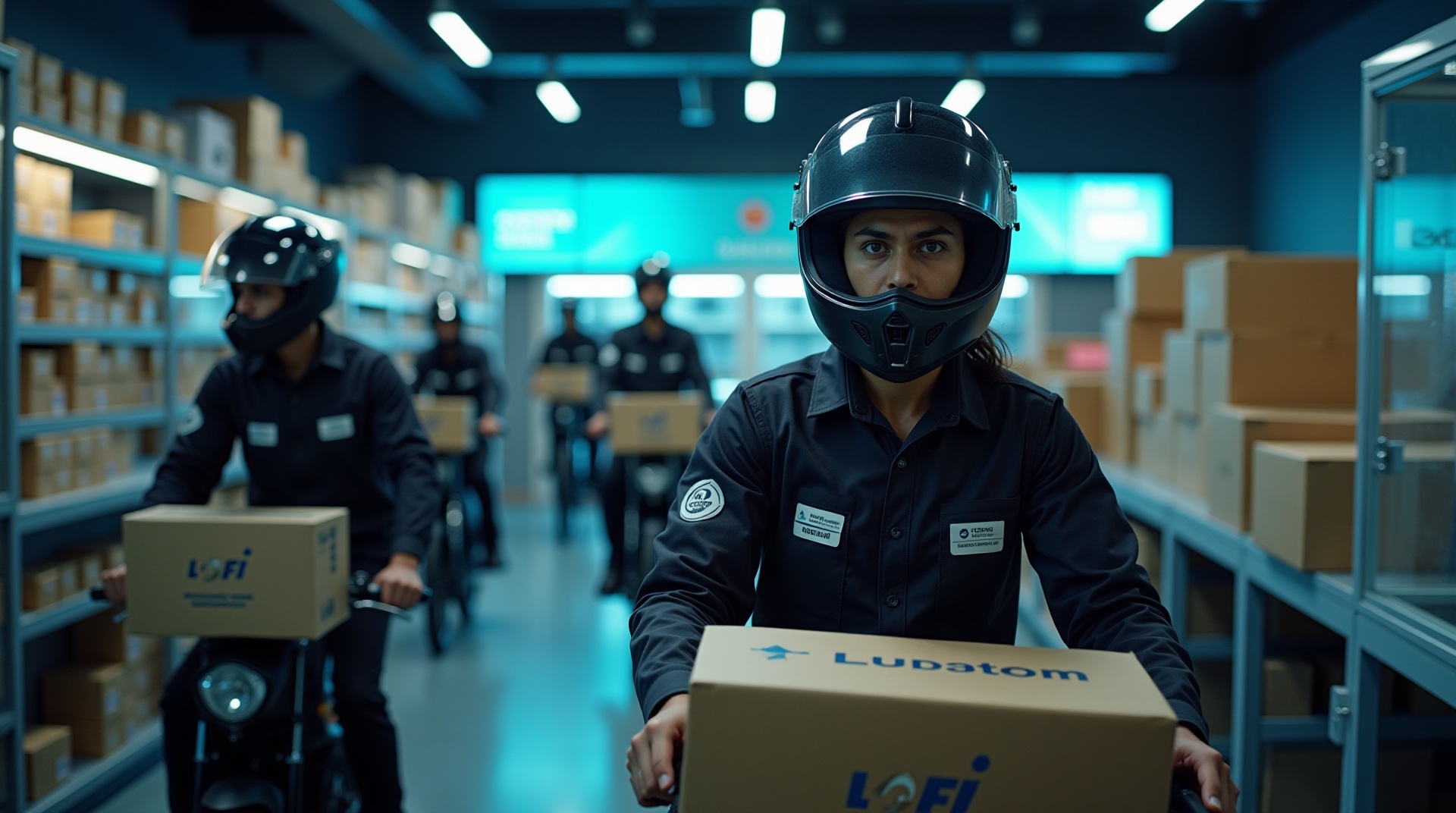
You are witnessing a pivotal moment in India’s digital commerce evolution. Amazon’s quick commerce service, Now, is not just growing; it’s expanding at a staggering 25% monthly rate, a fact shared directly by CEO Andy Jassy. As someone deeply invested in e-commerce strategy, whether you run a digital marketplace, a D2C brand, or work in logistics and fulfillment, this growth signals a profound transformation in how consumers demand and expect their essentials delivered instantly. It’s time to understand what this momentum means for your business model, your operational priorities, and your competitive positioning in one of the world’s most challenging and opportunity-rich retail markets.
Why This Matters to You
The rapid expansion of Amazon Now is more than just a growth metric—it’s a strategic indicator of shifting consumer behaviors and market forces in India. For you, it highlights an urgent necessity: to integrate or rival ultra-fast delivery models that are becoming table stakes in customer expectations. Delays in responding to this new standard can impact your ability to attract and retain customers, especially as quick commerce blurs the lines between e-commerce and traditional retail experiences.
Whether you lead a marketplace, manage a D2C brand, or oversee last-mile operations, recognizing the implications of Amazon Now’s growth is crucial. It compels a rethink of not just delivery speed but also inventory management, technology integration, and customer engagement strategies.
What Is Happening in the Quick Commerce Space?
Amazon Now’s 25% monthly growth encapsulates an aggressive push to scale ultra-fast delivery networks across India’s diverse urban and semi-urban landscapes. Consumers across tier-1 to tier-3 cities are increasingly prioritizing delivery speed for everyday necessities. This demand surge is reshaping last-mile logistics with new fulfillment centers, coupled with advanced inventory algorithms and AI-driven demand forecasting becoming the norm.
Beyond speed, the service’s rise reflects deeper integration of digital payments and frictionless checkout experiences, creating an ecosystem that promises convenience alongside scale. Amazon’s robust funding and technology resources allow Now to refine these systems rapidly, setting a high bar for quick commerce competitors.
Key Strategic Impacts on E-Commerce Businesses and Platforms
This impressive growth trajectory is a clear signal that quick commerce is becoming a primary battleground for market share and customer loyalty. For marketplaces and quick-commerce startups, you must innovate your fulfillment and delivery infrastructures to offer ultra-fast service at scale without eroding unit economics — an ongoing tension that defines sustainable growth today.
Amazon’s scale-up of Now also illustrates the increasing convergence of e-commerce, logistics, and technology sectors. Building scalable, hyperlocal networks reinforced by real-time inventory management, AI-assisted stocking, and seamless digital payments is your pathway to not just growth but deeper consumer trust and higher retention.
Insights for D2C Brands and Retailers
For your D2C brand, integrating with quick commerce platforms like Amazon Now or developing your own rapid fulfillment capabilities can accelerate growth trajectories and enhance customer loyalty. However, speed-focused operations demand lean, agile inventory and logistics strategies. This requires reevaluating warehouse locations, partner networks, and tech adoption to optimize product availability and delivery times.
Investor and Industry Outlook
From the investment vantage point, Amazon Now’s growth signals robust investor confidence in scalable hyperlocal delivery models promising attractive contribution margins and sustainable customer acquisition costs. Smaller players in the market are now under intensified pressure to either innovate significantly or pursue strategic alliances to remain competitive against such deep-pocketed entrants.
“In e-commerce, growth matters — but retention is what turns traffic into a business.”
Practical Takeaways for E-Commerce Leaders
- Understand the urgency: Quick commerce is reshaping consumer delivery expectations; prioritize ultra-fast fulfillment integration.
- Invest in technology: Leverage AI for demand forecasting and inventory optimization to maintain lean operations with quick turnarounds.
- Rethink logistics: Build or partner for scalable hyperlocal delivery networks that balance speed and unit economics.
- Enhance payment and checkout: Seamless digital payments and frictionless customer journeys are now part of the quick commerce advantage.
- Collaborate strategically: Consider alliances or platform integrations to boost reach, reduce costs, and accelerate service speed.
“The real edge is not only in selling faster, but in building a brand, a system, and a customer relationship that lasts.”
Risks and Challenges to Monitor
While the Amazon Now growth story is compelling, you must be wary of the challenges inherent in scaling quick commerce. Ultra-fast delivery demands significant infrastructure investment and operational precision, where missteps can erode margins quickly. The pressure on unit economics is real—balancing speed with profitability remains a tug of war.
Additionally, regulatory considerations around labor, urban logistics, and data privacy continue to evolve and can impact execution strategies. For D2C brands and marketplaces, rapid scaling without undermining customer experience or brand value can be a tricky balance.
What You Should Watch Next
Keep an eye on how Amazon Now expands its footprint beyond major metros into tier-2 and 3 cities, and whether it deepens integrations with other Amazon services to build ecosystem stickiness. Also, watch emerging technology deployments like AI-enhanced routing, hyperlocal micro-warehousing, and payment innovations that could redefine cost structures and customer experiences.
Moreover, observe how competitors respond—whether through partnerships, acquisitions, or tech innovation—as this will shape the competitive landscape significantly.
“When logistics, customer trust, and unit economics align, digital commerce growth becomes far more durable.”
Conclusion
Amazon Now’s 25% monthly growth in India is more than a performance number—it’s a clear signal that quick commerce is reshaping the digital retail landscape. For your e-commerce venture, this means mastering quick commerce capabilities, investing intelligently in fulfillment networks, and enhancing payment and checkout experiences. These elements will define competitive advantage and market leadership in India’s next-generation digital commerce ecosystem.