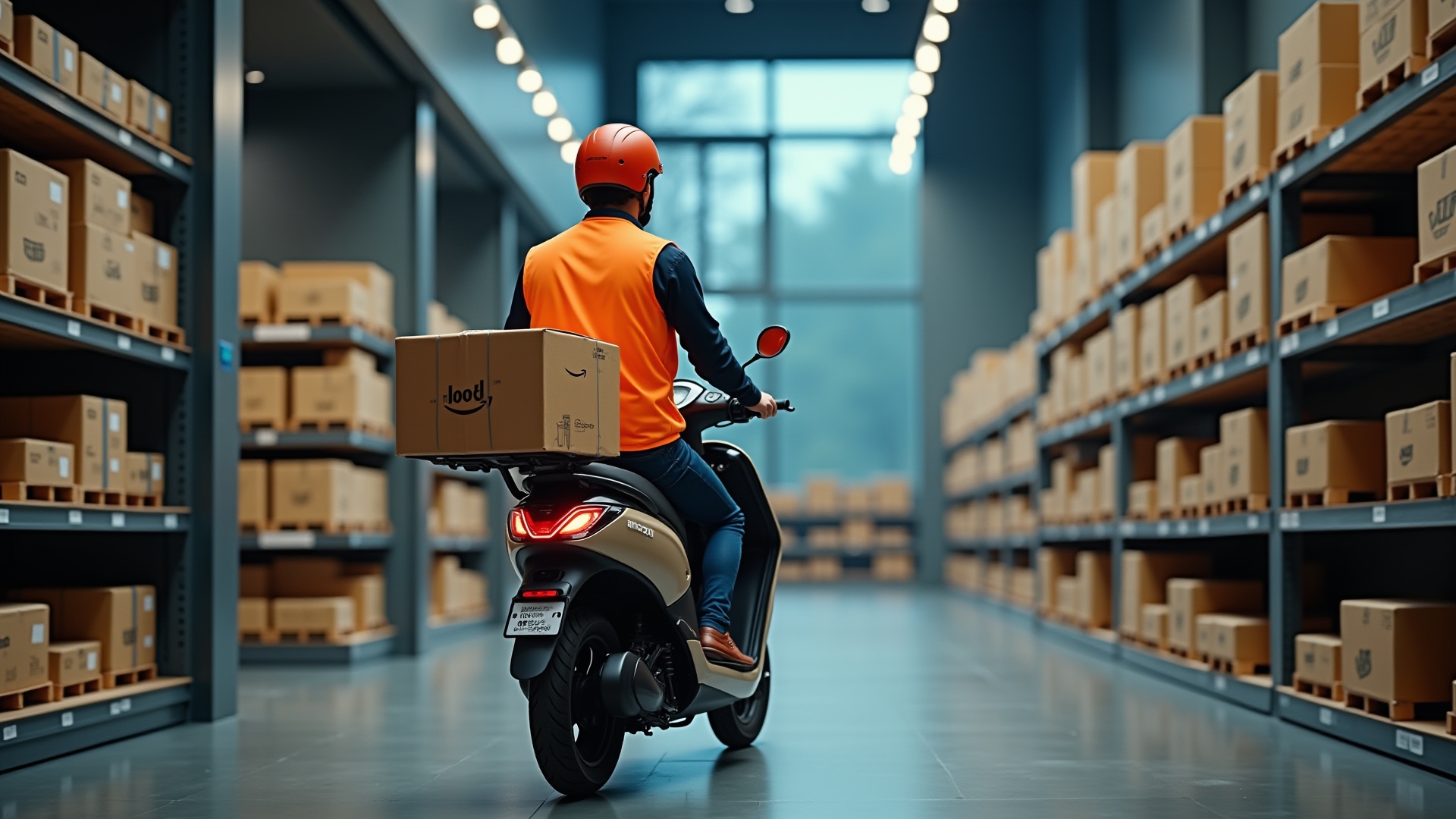
In the fiercely competitive arena of India’s digital retail, rapid adaptation often spells the difference between market leadership and obsolescence. As you chart your course in e-commerce, understanding Amazon’s decisive pivot towards quick commerce is vital for your strategic playbook. This is not just another operational upgrade for Amazon; it’s a calculated move that redefines the quick commerce battleground in India, a market where speed, convenience, and immediacy are reshaping consumer expectations and competitive dynamics.
Why Amazon’s Quick Commerce Strategy Matters to You
Your business—whether a marketplace operator, D2C brand, or logistics partner—is intertwined with the evolving fabric of India’s digital commerce. Quick commerce, with delivery times measured in minutes, isn’t a niche trend but a sweeping transformation impacting how your customers expect to shop, receive, and repurchase. Ignoring this seismic shift risks your brand’s customer acquisition efficiency and long-term profitability, as shopper loyalty increasingly anchors to convenience and reliability.
Amazon’s reinvestment signals that quick commerce is now a commercial imperative. If your strategies don’t align with this evolution, you may find yourself caught in higher acquisition costs, diminishing contribution margins, and missed opportunities for habitual, high-frequency transactions that quick commerce enables.
Decoding the Current Quick Commerce Landscape in India
India’s quick commerce market thrives on urban demand but is extending its footprint into Tier-2 and Tier-3 cities, pushing boundaries of last-mile fulfillment and logistical ingenuity. Competitors, including nimble homegrown platforms and established rapid delivery services, have already capitalized on localized supply chains and efficient hyperlocal fulfillment to capture significant market share.
Delivering groceries, essentials, and consumer goods within 30 minutes or less has become a customer expectation rather than an exception, forcing platforms to rethink infrastructure and operational models. This intensifies pressure on unit economics and requires exceptionally tight coordination across inventory, delivery partners, and digital payment systems.
Amazon’s Strategic Repositioning: Infrastructure, AI, and Customer Experience
Amazon’s renewed thrust is anchored in scaling its micro-fulfillment centers strategically, refining last-mile logistics partnerships, and bolstering its assortment in critical verticals such as essentials—a category with inherently high repeat purchase frequency. This effort is not just about faster deliveries, but about embedding itself deeper into daily consumer routines across expanding geographies.
Moreover, Amazon’s advantage lies in its ability to harness AI-driven personalization and digital payment integration. By tailoring product discovery and optimizing checkout experiences, it drives higher conversion rates and repeat purchases—key to building sustainable customer lifetime value in a quick commerce context.
“In e-commerce, growth matters — but retention is what turns traffic into a business.”
Yet, the journey is challenging. Amazon must contend with startups and incumbents specialized in hyperlocal networks, operational efficiencies, and finely tuned unit economics perfected over rapid cycles. The scale of Amazon’s investment signals an urgent strategic imperative to not just keep pace but define market standards.
Broader Implications for India’s E-Commerce Ecosystem
Amazon’s aggressive push into quick commerce will likely accelerate innovations not only in delivery speed but also in assortment strategies, customer engagement, and digital retail experience across the ecosystem. You should anticipate a ripple effect where marketplaces and D2C brands recalibrate their operations and customer retention tactics.
This competition will ignite new partnerships spanning technology, logistics, and finance. Importantly, evolving policy frameworks around last-mile logistics, supply chain digitization, and fintech adoption will shape competitive edges and profitability frameworks.
“The real edge is not only in selling faster, but in building a brand, a system, and a customer relationship that lasts.”
Strategic Insights: What Amazon’s Quick Commerce Push Teaches You
For those steering e-commerce businesses, the takeaway is clear: agility across your supply chain, fulfillment, and digital payment systems is no longer optional. You must scrutinize your unit economics—quick commerce often compresses margins but can expand customer lifetime value through repeat purchases.
Your customer experience strategy must evolve beyond price wars. Focus on building seamless, personalized shopping journeys and reliable fulfillments to cultivate habitual buying behaviors. Complement these with AI-driven merchandising and intelligent assortment strategies designed for high-frequency consumption.
Actionable Takeaways for E-Commerce Leaders
- Prioritize micro-fulfillment infrastructure: Smaller, strategically located distribution centers are critical to reducing delivery times and enhancing operational agility.
- Optimize last-mile execution: Strengthen partnerships with local delivery agents and integrate real-time tracking to increase reliability.
- Invest in AI and digital payments: Enhance checkout speed and personalize product recommendations to boost conversions and retention.
- Revise unit economics: Deep dive into contribution margins specific to quick commerce and optimize for profitability alongside growth.
- Leverage policy insights: Monitor regulatory developments that impact logistics, tax frameworks, and fintech interfaces to stay ahead competitively.
Risks and Challenges to Navigate
While the opportunity is vast, quick commerce demands heavy upfront investment and operational complexity. Managing inventory with precision, ensuring flawless last-mile execution, and maintaining profitability under tight delivery windows are ongoing hurdles. Additionally, rapid customer acquisition could strain payment and fraud management systems if not scaled carefully.
You also face the risk of market saturation and consumer fatigue if convenience offerings do not differentiate or scale sustainably. Amazon’s moves may lead to an intensifying race that raises expectations—and costs—across the sector.
What to Watch Next in the Quick Commerce Ecosystem
Keep an eye on:
- The expansion of Amazon’s micro-fulfillment centers beyond metros into Tier-2 and Tier-3 markets.
- Innovations in AI-driven personalization and checkout optimizations that blend convenience with conversion.
- Emerging partnerships between marketplaces, fintech, and logistics to enhance seamless delivery experiences.
- Policy changes affecting last-mile logistics, digital payments, and supply chain digitization that could reshape operational models.
“When logistics, customer trust, and unit economics align, digital commerce growth becomes far more durable.”
Conclusion: Positioning Your Business in a Quick Commerce-Driven Future
Amazon’s quick commerce drive underscores a moment of reckoning for India’s digital retail sector. For you, it means adapting swiftly to meet immediate consumption patterns is no longer a competitive advantage but a foundational requirement. Your playbook must integrate agility in logistics, sophistication in digital engagement, and a razor-sharp focus on profitability.
By understanding and leveraging the lessons from Amazon’s strategic repositioning, you can better navigate the changing digital commerce landscape—turning speed and convenience into durable assets that drive growth, customer loyalty, and market distinction.