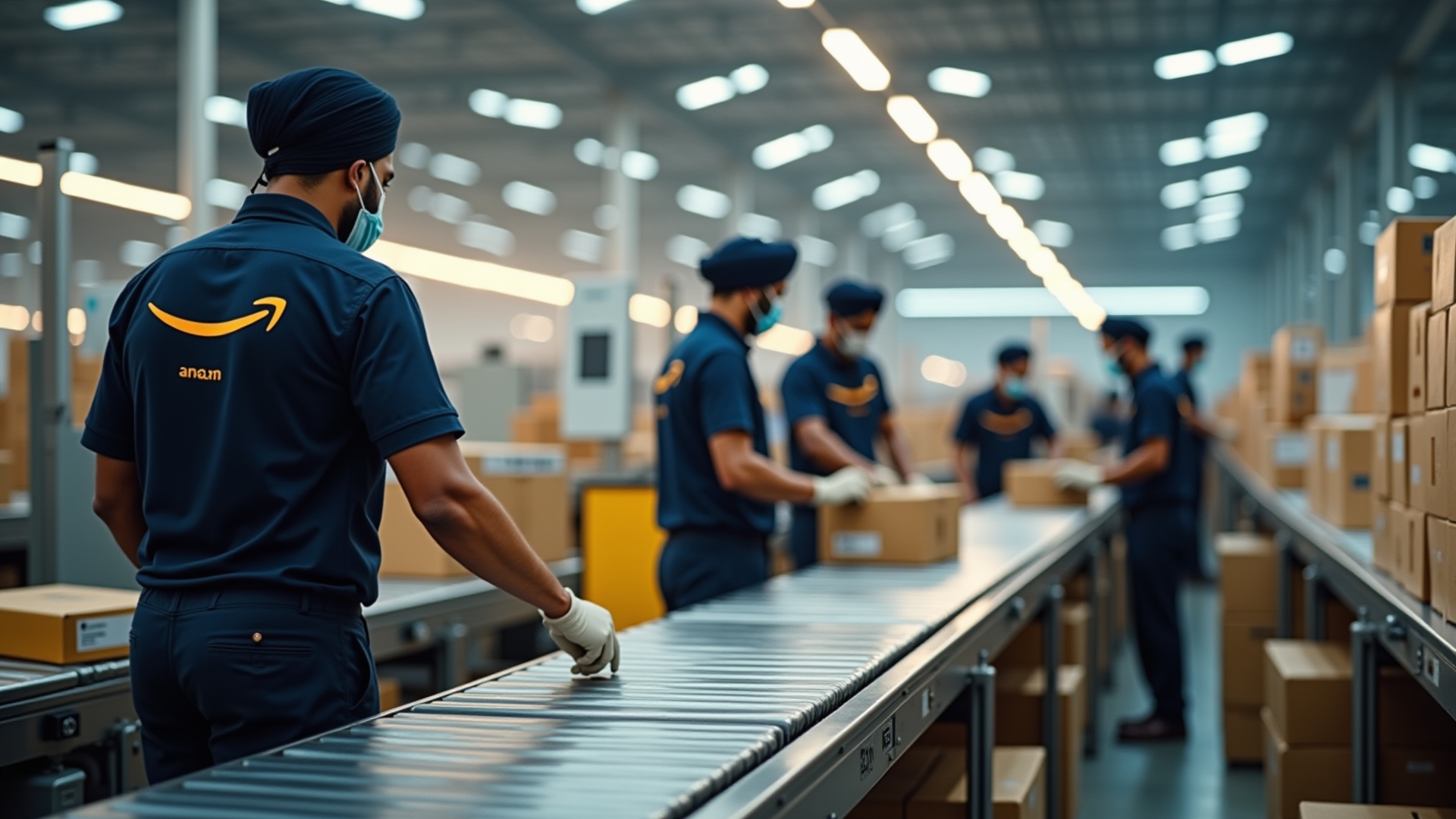
Amazon India’s announcement to invest Rs 2,800 crore to upgrade its logistics infrastructure and quick commerce capabilities is not just another headline — it’s a strategic milestone redefining the contours of India’s digital retail landscape. For you, whether you manage a D2C brand, lead a marketplace, or oversee last-mile logistics, understanding this development is key to navigating the evolving e-commerce ecosystem where speed, fulfillment excellence, and seamless customer experiences shape market leaders.
Why This Matters to You
In a market as dynamic and competitive as India’s, logistics is no longer a backend function; it’s a critical growth lever and a significant differentiator. When Amazon India commits Rs 2,800 crore to logistics and quick commerce, it signals that delivery speed, reliability, and supply chain integration have become decisive factors for customer retention and lifetime value. For your business, this signals heightened expectations from customers in tier-2 and tier-3 cities and an urgent need to optimize fulfillment economics while expanding your reach.
This is especially relevant if your growth plans include quick commerce or faster delivery models. Amazon’s investment isn’t just about bigger warehouses or more delivery vans — it’s a strategic push to balance fulfillment costs with improved unit economics and customer acquisition efficiency. You need to ask: how resilient and adaptive is your logistics framework against such intensified competition?
What Is Happening with Amazon India’s Investment?
The Rs 2,800 crore fund is earmarked for bolstering Amazon India’s logistics backbone and scaling its quick commerce segment — the ultra-fast delivery service designed to meet surging consumer demand for near-instant product availability. This move aims to improve supply chain velocity, last-mile fulfillment precision, and delivery reliability, particularly in underserviced urban and peri-urban markets experiencing rapid e-commerce adoption.
This capital infusion extends beyond traditional warehousing — it encompasses technology-enabled supply chains, automation, and enhanced network density, which collectively optimize speed without fracturing unit economics. For Amazon, this isn’t merely about operational expansion; it’s a sophisticated recalibration of its model to capture and retain highly time-sensitive customer segments.
Key Business and Market Impacts
- Fulfillment as a Competitive Moat: By investing heavily in logistics and quick commerce, Amazon India is setting a new industry standard. For you, this manifests as a competitive imperative to innovate on delivery speed and reliability or risk losing customer mindshare.
- D2C and Marketplace Dynamics: Local quick commerce startups and emerging D2C brands will feel the pressure to scale rapidly and refine last-mile tactics. Your brand’s long-term value increasingly depends on how swiftly and seamlessly you can get products into customers’ hands.
- Unit Economics and Customer Retention: Logistics improvements enable better cost control and allow for more aggressive retention strategies through enhanced service levels, driving repeat purchases and higher lifetime value.
- Omni-channel and Tech-Enabled Retail: Amazon’s approach highlights a growing convergence between logistics, payments, and personalized experiences — the integration of these elements is becoming a decisive factor in driving profitability and customer loyalty.
Strategic Insights for Your Business
This investment offers you several strategic considerations to refine your growth and operational playbook:
- Prioritize Supply Chain Agility: The ability to pivot quickly in your logistics and fulfillment operations, using data analytics and automation, is critical for competing against scale players like Amazon.
- Balance Speed with Profitability: Quick commerce demands faster delivery but not at the cost of unsustainable fulfillment expenses. Aim for optimized routes, inventory placement near demand clusters, and tech-enabled demand forecasting.
- Leverage Cross-Functional Integration: Synchronizing your logistics capabilities with payments, customer engagement, and inventory management deepens your competitive moat and elevates the customer experience.
- Expand Thoughtfully into Tier-2 and Tier-3 Markets: These cities represent a massive growth opportunity but also introduce unique operational challenges — your logistics investment strategy must factor in local nuances, infrastructure, and consumer behavior.
“In e-commerce, growth matters — but retention is what turns traffic into a business.”
Practical Takeaways You Should Focus On
- Analyze your current logistics network for gaps in speed, cost efficiency, and technology integration to identify immediate improvement areas.
- Monitor quick commerce trends closely, especially around consumer expectations for delivery times and service quality in emerging markets.
- Invest in tech-enabled fulfillment solutions like automated warehousing, AI-driven inventory management, and dynamic routing to reduce operational friction.
- Develop partnerships or consider acquisitions that can strengthen your last-mile delivery capability or expand your geographic footprint.
- Evaluate your unit economics constantly as you scale delivery speed — maintaining the delicate balance between cost and customer satisfaction is vital.
- Keep an eye on policy shifts related to logistics, e-commerce regulations, and infrastructure development that may create new opportunities or constraints.
Editorial Perspective and Expert Viewpoints
Amazon’s move exemplifies how logistics innovation drives long-term leadership in digital retail. “The real edge is not only in selling faster, but in building a brand, a system, and a customer relationship that lasts.” These words encapsulate the high-stakes game you’re now part of — where logistics, customer trust, and unit economics must align seamlessly.
Moreover, this investment is a clarion call for the broader ecosystem — marketplaces, D2C brands, logistics providers, and investors — to prioritize supply chain sophistication in their strategic planning. The race to win at quick commerce is as much about smart capital deployment as it is about operational excellence.
Risks and Challenges to Navigate
While Amazon’s investment sets a benchmark, you should be aware of the risks that come with scaling logistics infrastructure in India:
- Capital Intensity and ROI Pressure: Heavy investment in warehouses, technology, and delivery fleet requires careful management to ensure sustainable returns.
- Operational Complexity: Coordinating multiple touchpoints in the last mile, especially in less developed regions, poses execution challenges.
- Competition Heat: Quick commerce space is crowded, with agile startups and regional players fiercely competing, which may compress margins.
- Regulatory and Infrastructure Constraints: Policy changes, local regulations, or infrastructure limitations could disrupt logistics plans or increase costs unexpectedly.
What You Should Watch Next
Track how Amazon India deploys this investment—especially the technology integrations and geographical expansion—because it will shape customer expectations and raise the bar for fulfillment speed and service quality. Also, watch how competitors respond; a wave of investments, partnerships, and innovations in logistics and quick commerce is inevitable.
Focus on new developments in embedded finance and checkout innovations paired with logistics enhancements, which together will offer holistic, frictionless customer experiences becoming the backbone of profitable digital retail.
Conclusion
Amazon India’s Rs 2,800 crore logistics investment is more than a capital expenditure — it’s a strategic blueprint signaling a new phase in India’s digital retail and quick commerce evolution. For you as a founder, CXO, or investor, staying close to how logistics innovation drives unit economics, customer acquisition, and retention will be critical to thriving in a fiercely competitive market.
Adapting quickly, integrating smart technology, and optimizing your supply chain are no longer optional — they are decisive factors for market leadership and sustainable profitability in India’s burgeoning e-commerce sector.