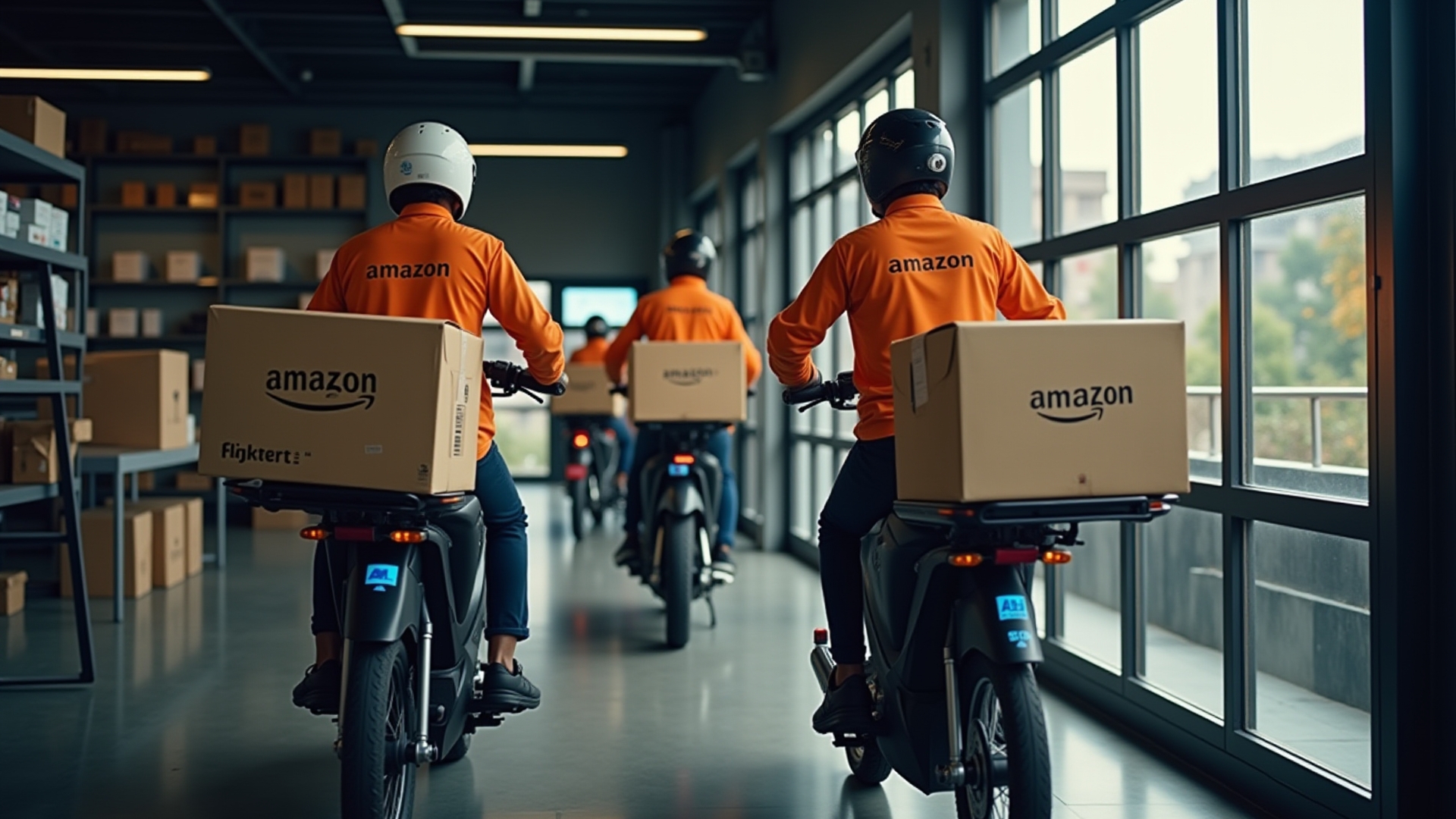
You are standing on the brink of a strategic shift that could reshape how speed defines competitiveness in India’s e-commerce sector. Amazon and Flipkart, two of the country’s largest digital marketplaces, are doubling down on delivery-in-minutes, a hyperlocal quick-commerce model designed to bring convenience goods to consumers within minutes of ordering. This evolution is not just operational—it’s a fundamental realignment of market expectations, logistics strategies, and customer engagement across India’s growing digital retail ecosystem.
Why This Matters to You: The New Speed Imperative
If you run an e-commerce business, a D2C brand, or oversee digital retail strategy, the intensifying focus on ultra-fast delivery in India demands your attention. Delivery speed is no longer just a customer convenience; it’s swiftly becoming a critical buying factor in tier-2 and tier-3 cities, where demand patterns are changing rapidly. Your ability to compete, retain customers, and grow market share hinges on how you adapt to this aggressive push by Amazon and Flipkart, who are setting new speed benchmarks through extensive logistical investments and technology integration.
What Is Happening: The Delivery-in-Minutes Surge
Amazon and Flipkart are spearheading the expansion of delivery-in-minutes services—part of the broader quick commerce trend. Their strategies focus on hyperlocal fulfillment powered by localized warehouses, sophisticated inventory management, and AI-driven demand forecasting. This allows them to deliver essential and convenience products swiftly, especially outside metro centers where consumer expectations are evolving and demand for immediacy is growing.
Such moves come with a strategic edge: by leveraging vendor networks and deploying technology platforms, these giants aim to provide faster deliveries while safeguarding margins, crucial in a market where operational costs can quickly erode profitability.
Key Business and Market Impacts: Operational Excellence Meets Customer Experience
This shift creates a multi-dimensional impact:
- Marketplace Strategy: Accelerated delivery speeds drive repeat purchase cycles, enhance customer lifetime value, and sharpen competitive differentiation. Marketplaces must invest in smart inventory placement and seamless last-mile execution to capitalize.
- D2C Growth: Brands integrated into these ecosystems gain unparalleled access to instant delivery capabilities, expanding reach in emerging markets and deepening consumer loyalty.
- Logistics Innovation: Building AI-optimized fulfillment centers and refining supply chains for variable demand patterns become non-negotiable priorities for leaders aiming to stay competitive.
Strategic Insights: Balancing Speed, Cost, and Sustainability
The real challenge lies in harmonizing rapid delivery with sound unit economics. While immediate gratification drives sales, the operational complexity of hyperlocal quick commerce demands innovative solutions to control costs.
Leaders in e-commerce need to leverage advanced data analytics not just for demand forecasting but for optimizing fleet deployment and warehouse automation. Margins hinge on your ability to scale infrastructure efficiently without sacrificing service quality during peak demand periods.
“When logistics, customer trust, and unit economics align, digital commerce growth becomes far more durable.”
Practical Takeaways: What You Should Act On Now
- Reassess Your Fulfillment Network: Evaluate opportunities for localized warehousing to support hyperfast deliveries in tier-2 and tier-3 cities.
- Invest in Technology: Deploy AI-driven demand prediction and route optimization tools that can handle the unpredictability of quick commerce.
- Partner Strategically: Collaborate with hyperlocal vendors and logistics providers to build scalable last-mile solutions.
- Monitor Profitability Closely: Track unit economics rigorously to ensure sustainable growth despite increased operational complexity.
Expert Perspectives
“In e-commerce, growth matters — but retention is what turns traffic into a business.”
“The real edge is not only in selling faster, but in building a brand, a system, and a customer relationship that lasts.”
Risks and Challenges You Must Anticipate
Executing delivery-in-minutes at scale comes with significant hurdles. Operational costs soar with increased delivery density and speed requirements, while maintaining consistent service quality during peak hours remains a constant battle. You must also be wary of potential margin compression and supply chain disruptions as you invest heavily in this transformation.
What to Watch Next in India’s Delivery-in-Minutes Ecosystem
Keep an eye on how Amazon and Flipkart innovate around technology integration and ecosystem partnerships. Regulatory developments around open commerce platforms like ONDC might also influence how hyperlocal delivery models evolve. Monitoring these dynamics will help you align your strategies with the broader market trajectory.
Conclusion: Preparing Your Business for the Delivery-in-Minutes Era
The delivery-in-minutes wave led by Amazon and Flipkart is more than a convenience upgrade—it is a strategic pivot that will reshape India’s e-commerce contours. To stay viable and competitive, you must rethink your fulfillment architecture, embrace technological innovation, and fine-tune your customer engagement strategies around immediacy without losing sight of profitability and sustainability.
Incorporating ultra-fast delivery into your growth arsenal now will position you to meet evolving consumer demands and unlock lasting advantages in India’s dynamic digital commerce landscape.